Overview
The CUNY Climate Assembly Project on Waste at Hunter College (CCAP) is a deliberative democracy initiative that empowers Hunter students to shape sustainable waste strategies on campus and beyond.
From April - June 2026, a broadly representative group of 30-45 students will convene for five full days and four 2-hour workshops. Students will learn from a diverse range of experts, weigh the opportunities and challenges of various waste management solutions, and collectively generate evidence-based recommendations for the campus community. Students and faculty not in the assembly will engage through classroom curriculum, public forums, and other events and programs. In Fall 2026 and Spring 2027, 9-12 post-assembly fellows will work with campus leadership to review any subsequent learning, planning, adaptation, and/or implementation of the recommendations.
The partnership between the CUNY Graduate (Center for the Humanities and the Institute for Research on the African Diaspora in the Americas and the Caribbean) and Hunter College ( The Office of the Provost, Sustainability Council, and The Center for Sustainable Cities) was made possible by the generous support of the Andrew W. Mellon Foundation. See the Hunter press release or the initial GC press release for more information.
CCAP is the first university-convened climate assembly in the US. As the nation's largest urban public university, CUNY is an ideal locale for such an ambitious democratic initiative. CCAP will serve as a model, reimagining universities as true schools for democracy, equipping the next generation of civic leaders with skills in civic problem-solving, and expanding how New Yorkers practice democracy beyond elections.
CCAP Process
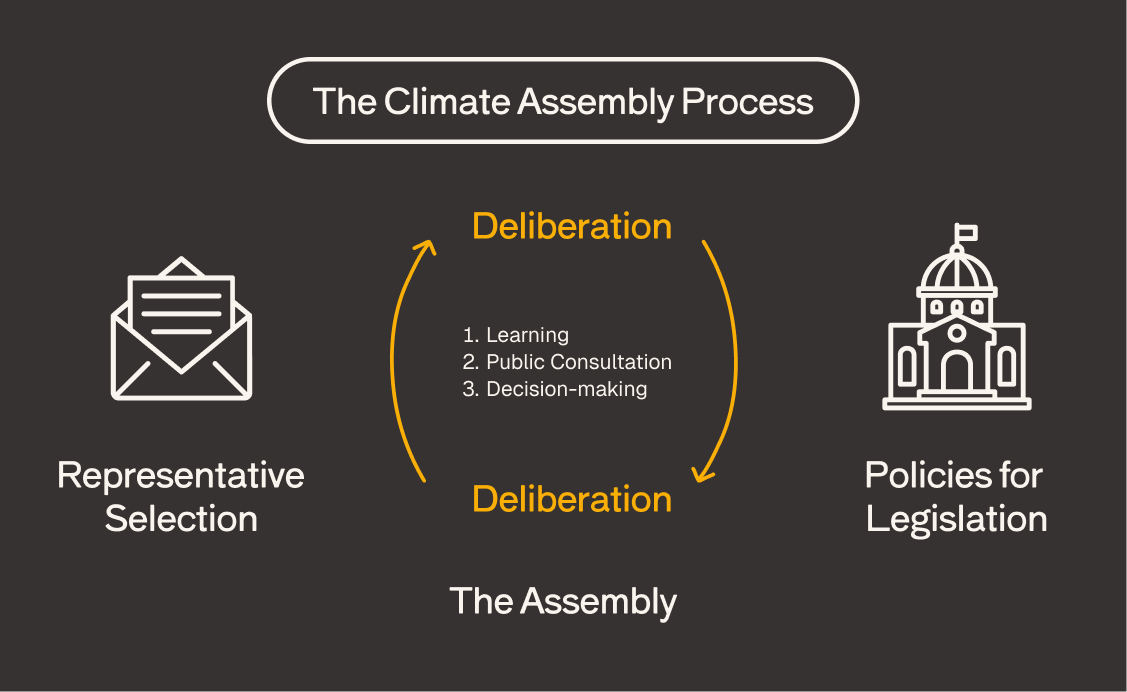
There are three primary stages for CCAP’s democratic process.

Stage 1
The Civic Lottery
December 2025 - February 2026
The Civic Lottery will randomly select 30-45 Hunter students to be a part of the assembly, ensuring the University's unique demographic diversity is fully represented.

Stage 2
The Climate Assembly
April - June 2026
The Assembly will convene for five full days and four 2-hour workshops. Student delegates will learn from a diverse range of experts, weigh the opportunities and challenges of various waste management solutions, and collectively generate evidence-based recommendations for the campus community.
The CCAP Impact Network of student organizations, university centers, faculty, and staff will connect the assembly to the broader community through public forums, classroom curricula, and other engagement strategies.

Stage 3
Post-Assembly Fellowship
Fall 2026 & Spring 2027
9-12 post-assembly fellows from the assembly will work with campus leadership to review any subsequent learning, planning, adaptation, and/or implementation of the recommendations.

What is a Climate Assembly?
Climate Assemblies gather everyday people to learn, deliberate, and develop policy solutions to a challenging climate issue.
Also called citizens’ assemblies, civic assemblies, or policy juries, these forums democratize policymaking by expanding who participates and how they collaboratively problem-solve.
Drawing on a long and diverse lineage of democratic decision-making practices, participants are selected through a civic lottery to ensure the assembly represents their communities' unique demographic and political diversity. Unlike a political poll or town hall, the assembly spends significant time (30-115 meeting hours) learning with a diverse range of experts, collaborating through facilitated deliberations, and developing recommendations on a complex climate issue. These recommendations inform policy and implementation strategies taken up by local governing bodies and community stakeholders.
Participants are paid and provided with services like interpretation and child care to remove barriers to participation. Small group facilitators aid in bridging partisan divides and ensuring all voices are heard, and public forums and engagements outside the assembly allow the broader public to learn and weigh in on the topic at hand.
Climate assemblies have been proven to address complex & polarizing issues
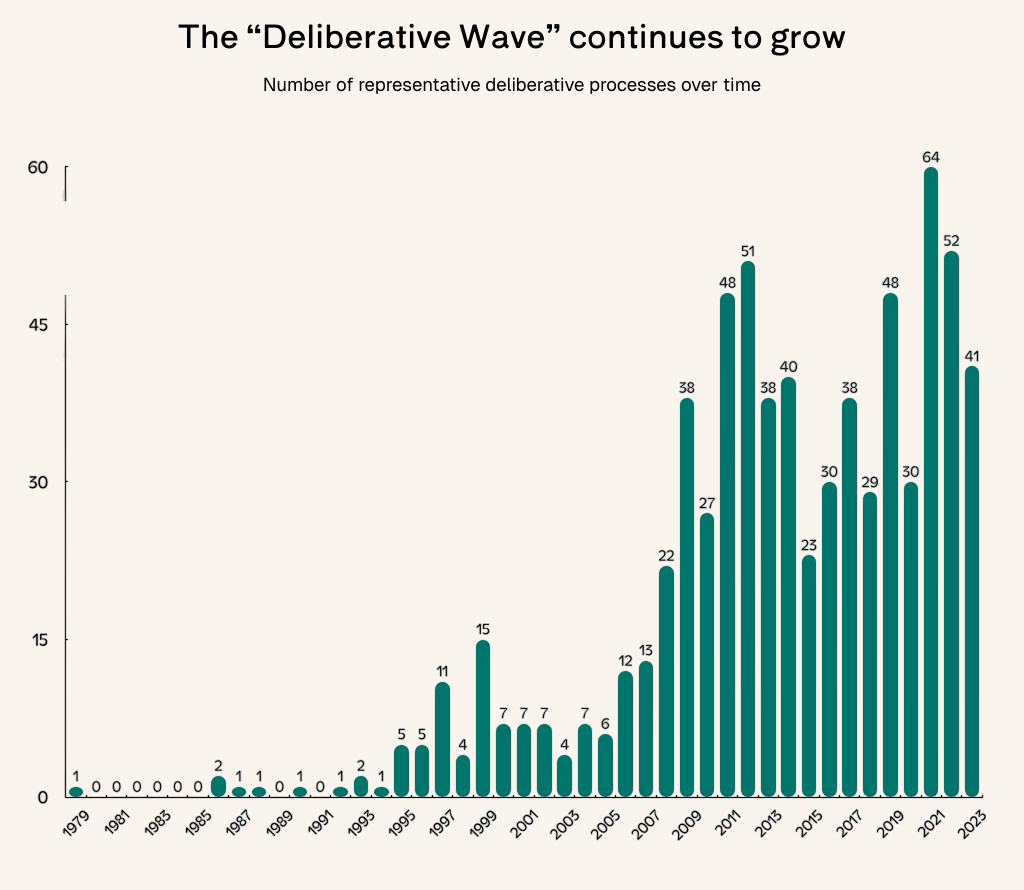
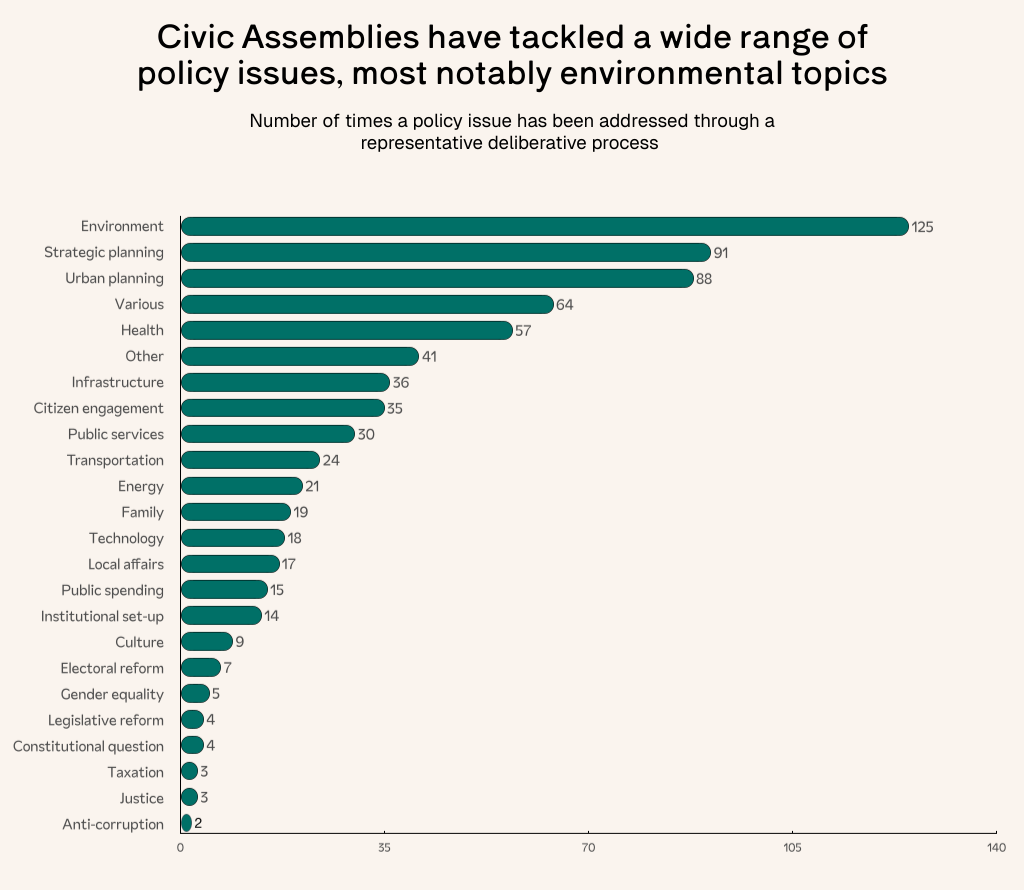
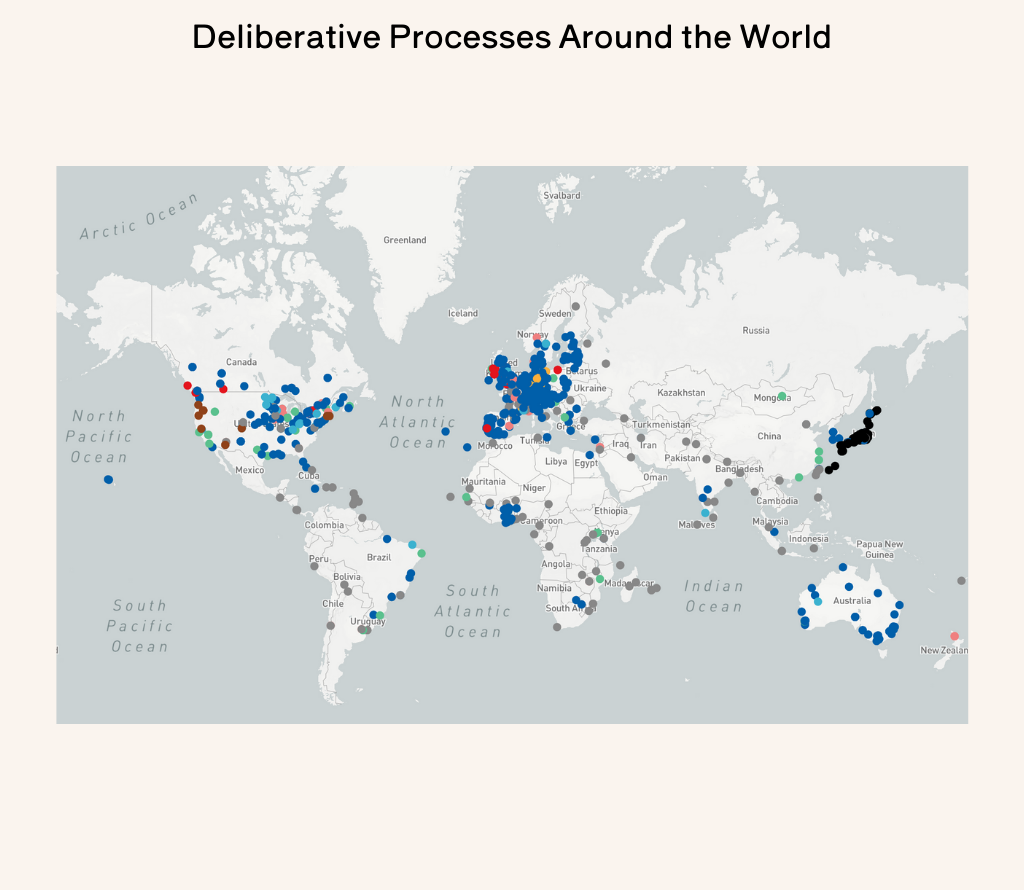
While assemblies have catalyzed climate action around the world, there have been over 700 examples worldwide addressing a variety of civic challenges, such as affordable housing, healthcare, education, and even constitutional reform on marriage equality and reproductive rights.
What advantages do climate assemblies afford over traditional policy pathways?
- Lead to better policy outcomes. Deliberations grounded in expert analysis and lived experience create informed decisions based on evidence rather than opinions.
- Create space and provide a framework to tackle complex problems that require long-term solutions that extend beyond electoral cycles.
- Provide legitimacy to make hard decisions with tough trade-offs. This proves especially true for climate policies that require substantial adaptation, compromise, or sacrifice.
- Build public awareness and momentum for cross-sector action on issues that need an ecosystem of actors to drive systems-level change.
- Helps to depolarize civic discourse while building discursive capacity for engaging in tough conversations across ideological divides.
- Increase trust in civic institutions by engaging in collaborative governance with the people they serve.
- Revitalize people's political agency by creating pathways for a general public to effect change on complex system-level issues.
See examples from around the globe
Classroom Curricula
Climate & democracy in the classroom
While 42 student delegates will participate directly in the intensive assembly process, faculty across disciplines can connect their courses to CCAP.
We have multiple lesson plans that range from 15 to 90 minutes in length that are designed to be easily implemented (plug and play), adaptable, and broadly relevant to Hunter students.
Lessons span from circular economy, campus waste practices, and Climate assemblies. Click here to download & more info!

Evaluation Report
A New Model for the Civic Turn in Higher Ed?
New Report Evaluating the CUNY Climate Assembly Project on Waste at Hunter College
If you’ve followed higher education over the last decade, you’ve heard that Americans’ confidence in colleges and universities is waning. The model of academic freedom and shared governance at the heart of higher ed is under sustained pressure. This “crisis” has been met, in part, with attempts to revitalize civics training, including an upsurge in the number of campus centers aiming to provide instruction on civil discourse. What some see as a means of nurturing democratic skills and values is seen in other quarters as an attempt to stifle dissent and block advocacy for change.
Hunter College offers an alternative model for universities looking to offer hands-on lessons about deliberative democracy and engage their students in institutional decisionmaking. From April through June of 2026, the CUNY Climate Assembly Project (CCAP) on Waste at Hunter College—the first university climate assembly in the country—brought together a representative group of Hunter students to learn about campus waste management, deliberate on challenges unique to Hunter’s campus and community, and devise proposals that would adequately respond to New York State’s waste-diversion requirements.
Today, the Center for Humanities is pleased to publish a report that assesses CCAP’s effectiveness and offers lessons for future university-based citizens' assemblies. Authored by Caroline Hanley (Professor of Sociology, William & Mary) and Anna Marchese (Senior Project Officer, Columbia World Projects), this independent evaluation draws on participant observation, pre- and post-assembly surveys, interviews, and document analysis.
The report details how CCAP fostered an inclusive and empowering environment for student delegates, highlighting strengths and challenges across the assembly’s design, participant and organizer experiences, deliberation, facilitation, recommendation development and approval. It also traces where and how trust, transparency, student learning, and civic engagement were operative throughout the process. Key observations include:
- Experiential forms of learning were the most impactful: A “waste artifact” exercise, a tour of campus facilities, and a bin-mapping activity connected distant policy questions to the systems, people, and limitations characterizing waste management and sustainability practices at Hunter.
- Trust deepened over time: Community agreements, regular opportunities to ask questions, and responsiveness to participant feedback created a culture of mutual respect and open inquiry. By CCAP’s close, participants were certain that their opinions were heard and seriously considered.
- Effective facilitation necessitated active judgment: While facilitators were skillful and cognizant of the need to spur participation while steering clear of directing outcomes, the line between supporting conversation and contributing substantive ideas was not always clear.
- Deliberative skills were honed: Beyond reporting deeper knowledge of university waste systems and appreciation for the custodial labor that keeps them running smoothly, students were empowered to ask tough questions and work through disagreements effectively.
- Confidence in the process outpaced confidence in the adoption: Delegates were uncertain whether institutional and budgetary constraints would allow Hunter to act on their recommendations.
Drawing on these observations, the report features recommendations that could strengthen the design and implementation of future university assemblies. Core lessons include:
- Clarify the institutional context: Where available, provide information about university budgets, decision-making structures, staffing constraints, and prior campus initiatives during the learning phase of the assembly.
- Introduce recommendation development at an earlier moment: Build in more time for proposal development, alongside structured opportunities to surface disagreement across the assembly.
- Plan for retention difficulties from the outset: To mitigate attrition, consider scheduling less-frequent gatherings in close succession, establish digital communication channels in advance, and schedule stipend payments around assembly milestones.
Read the report
A second evaluation, planned for spring 2027, will examine the implementation of the assembly’s recommendations—including the activities undertaken by post-assembly student fellows—and the institution’s response.
Partners





People













News
News
CUNY Graduate Center in the Press: New York Focus Highlights the CUNY Climate Assembly Project
News
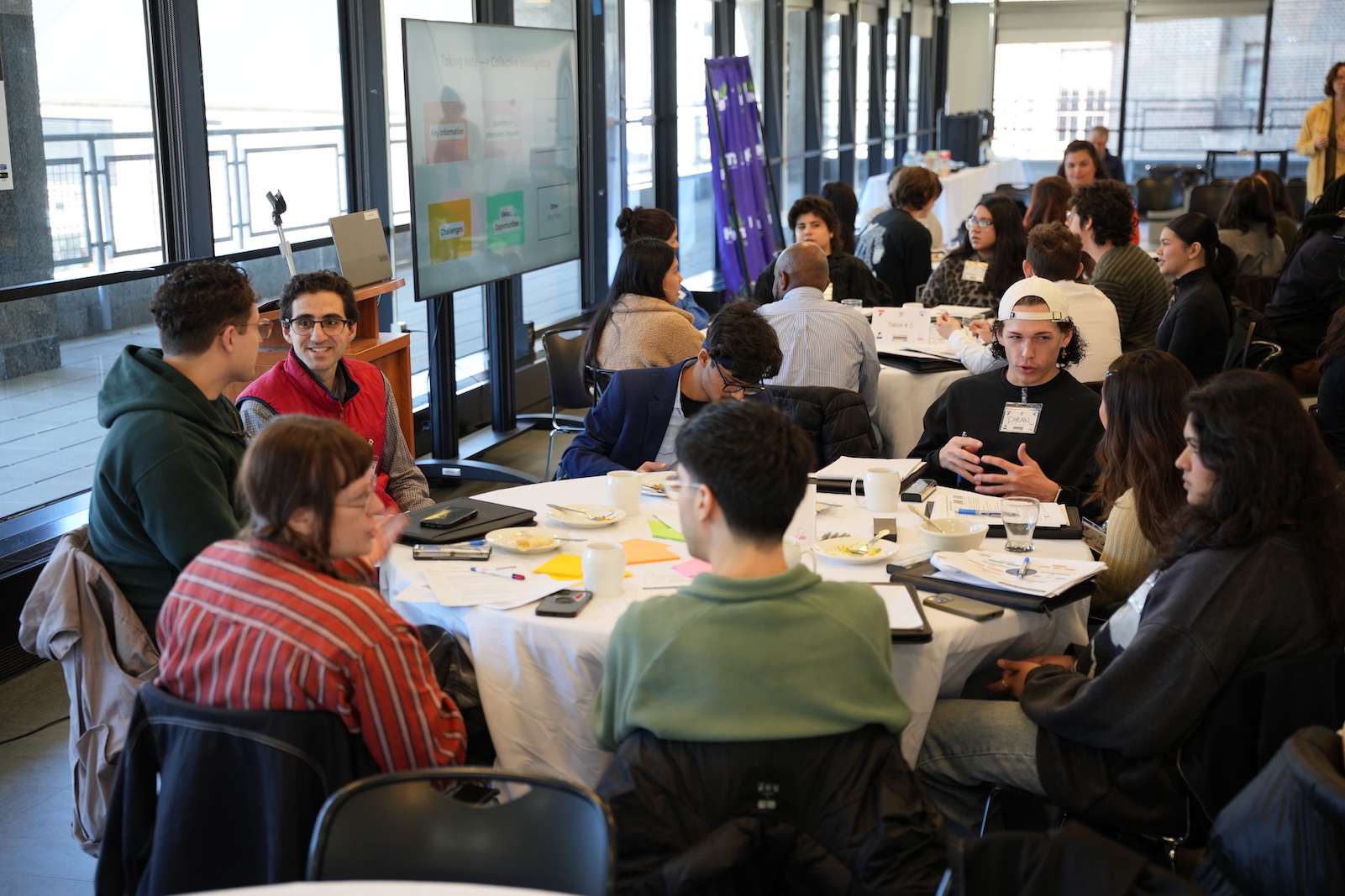
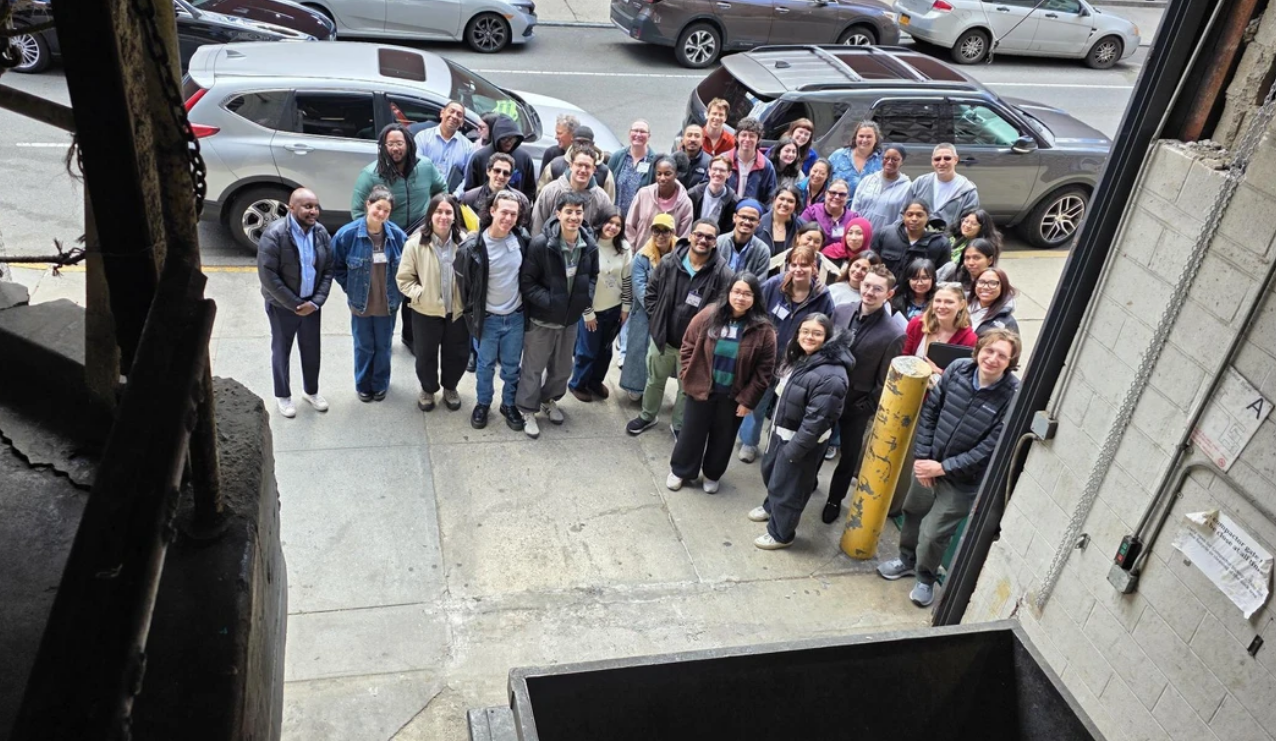
CCAP Recap: Civic Lottery & The First Assembly Convening
Opportunities & News

Opportunity for GC Students: CUNY Climate Assembly Project (CCAP) Small Group Facilitators
Opportunities & News

Opportunity for Hunter College Students: CUNY Climate Assembly Project (CCAP) Delegate Lottery Application
Fellowships & News

Announcing the CUNY Climate Assembly Project Organizing Fellows
Fellowships, Opportunities & News
CALL FOR APPLICATIONS: CUNY Climate Assembly Project (CCAP) Fellowship Opportunities
Related Events
Community Gathering
Assembly Now! CUNY & The Climate Democracy We Need


Celebration & Project Launch
CCAP Public Launch & Civic Lottery Event