People

Paulo Suarez
ERI/PS2 Public Research Fellow
Paulo Suarez is an Anthropology Ph.D. Candidate with the CUNY Graduate Center. He studies housing, migration, and social movements in Los Angeles. Paulo is a 2026 ERI/PS2 Summer Fellow.
This summer marked a year since the beginning of the mass ICE raids in Los Angeles. While they continue in new forms across the outskirts of the city, the poorest and densest neighborhoods—where I organized and conducted research alongside the LA Tenants Union (LATU)—have seen a major decrease in the violent migrant kidnappings that notoriously made a spectacle out of the suffering of the people of LA. Regardless, the scars left by the “psychological warfare” waged by Trump, as a Oaxacan tenant once put it to me, remain fresh for poor migrant tenants and organizers alike.
What is the role of the public scholar in our conjuncture? During my time with LATU, I encountered several researchers whose scholarship was public in that it brought specialized skills (such as research on corporate landlords) to organizers interested in learning them. These often took the form of semi-internal events, sponsored by LATU but organized separately by the specialist researcher.
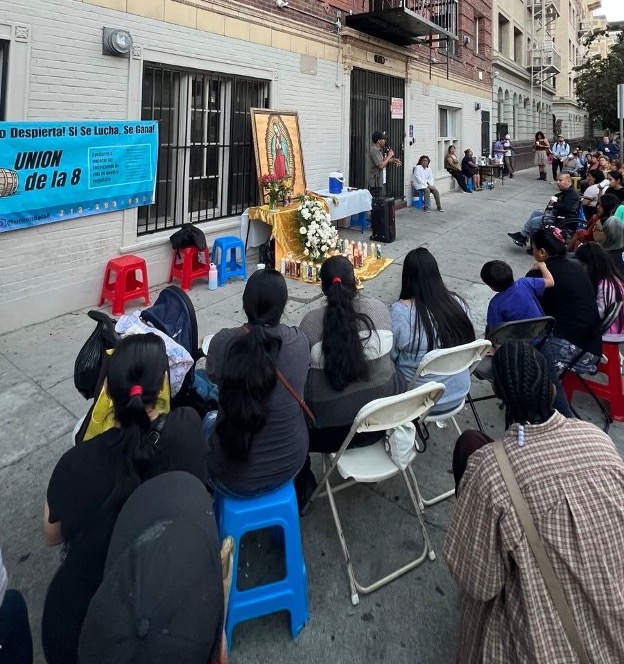
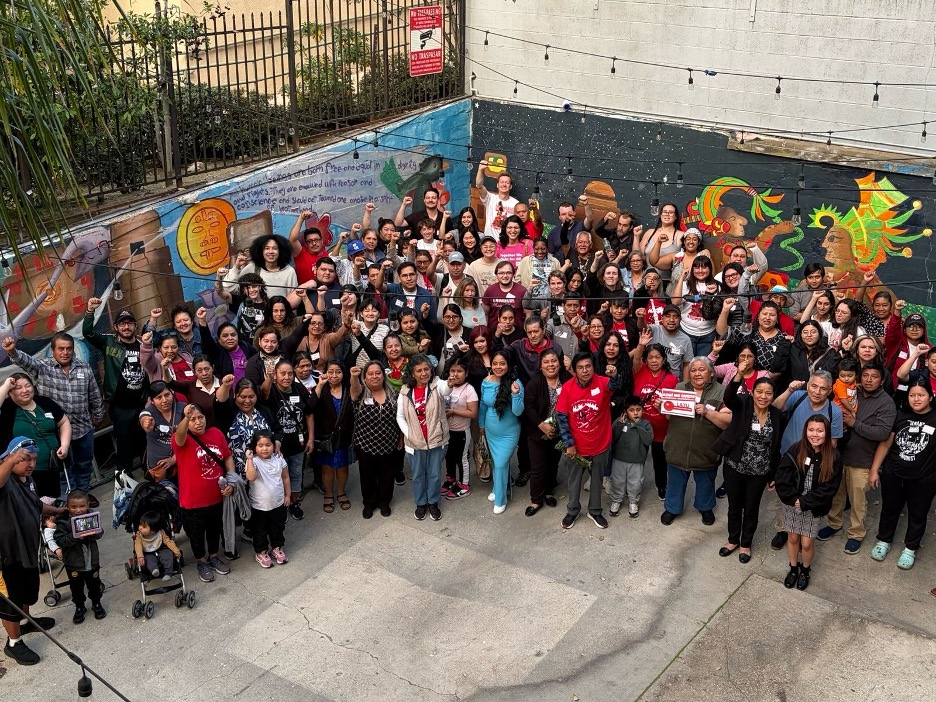
As an ethnographer, I dedicated myself to organize regularly with LATU, specifically the “Union de la 8” neighborhood committee. I approached my public scholarship not as submissive to the desires of other organizers, nor as external in the form of separate events. I organized tenant associations, brought energies up and won victories with tenants, but I also failed and the cost of failure far exceeded a poorly attended training. I’m far from alone on this. There are some scholars in LATU whose continuous, on-the-ground organizing resonates with this need to experiment in tension with other organizers. This is a tension you earn and, so, one you must work for in the long term.
The raids are the most evident example that we live in a time of morbid symptoms. The role of the public scholar today is to enter the space of politics with courage to confront fear not just of the enemy but of ourselves, to learn the strategic meaning of solidarity and make allies in scary places, and to work in tandem and humility (as well as in disagreement and respect) with other organizers and the popular classes we organize with.