People

Xavier Fitzsimmons Cruz
ERI/PS2 Public Research Fellow
Xavier Fitzsimmons Cruz studies Latinx migration, labor, and public history, with a focus on archives, oral histories, and community memory in post-industrial Upstate New York. He is a second-year Ph.D. student in history at the CUNY Graduate Center and is committed to building community-centered archives that document the stories of Latinx communities in the United States. Xavier is a 2026 ERI/PS2 Summer Fellow.
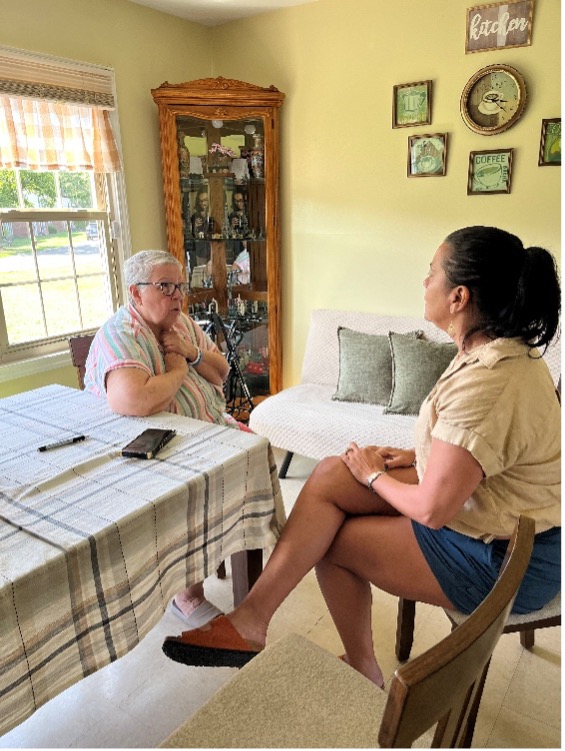
When Nidsa Vázquez arrived in Amsterdam, upstate New York, in November 2017, just weeks after Hurricane María devastated Puerto Rico, she did not intend to stay. She brought two of her grandsons with her after months of food and water shortages and rolling electricity blackouts. In an oral history interview conducted in Spanish by community activist Julia Caro and me, Nidsa told us: “No teníamos casi comida, casi agua… sufrimos mucho. Tomé la decisión de venir, pero yo vine no para quedarme. Yo vine para estar un tiempo y regresar… Me traje a mis nietos… para darles un mejor ambiente.”
By January 2018, Nidsa had found an apartment in Amsterdam, but, as she remembered, “no tenía nada.” She slept on the floor until workers from Centro Cívico — the main local Latino community organization — brought three small beds, one for her and each of her grandchildren. Her story captures what Nuestra Historia Amsterdam is trying to preserve: not just why Latinos came to this small industrial city in New York’s Mohawk Valley, but also how they responded to displacement, built institutions, cared for each other, and made Amsterdam their home.
The project began with the personal archive of former community activist Ladan Muñoz, who preserved decades of documents, programs, newspapers, letters, and other materials from her work with Centro Cívico. Founded by Puerto Rican activists in 1986, Centro Cívico became an important center of mutual aid and social services in Amsterdam. Its files also document the hostility Latino residents faced. One anonymous hate letter from 1993 read “Shoot all the spics… the lazy bastards,” followed by a list of reasons the city’s growing Latino population should leave.
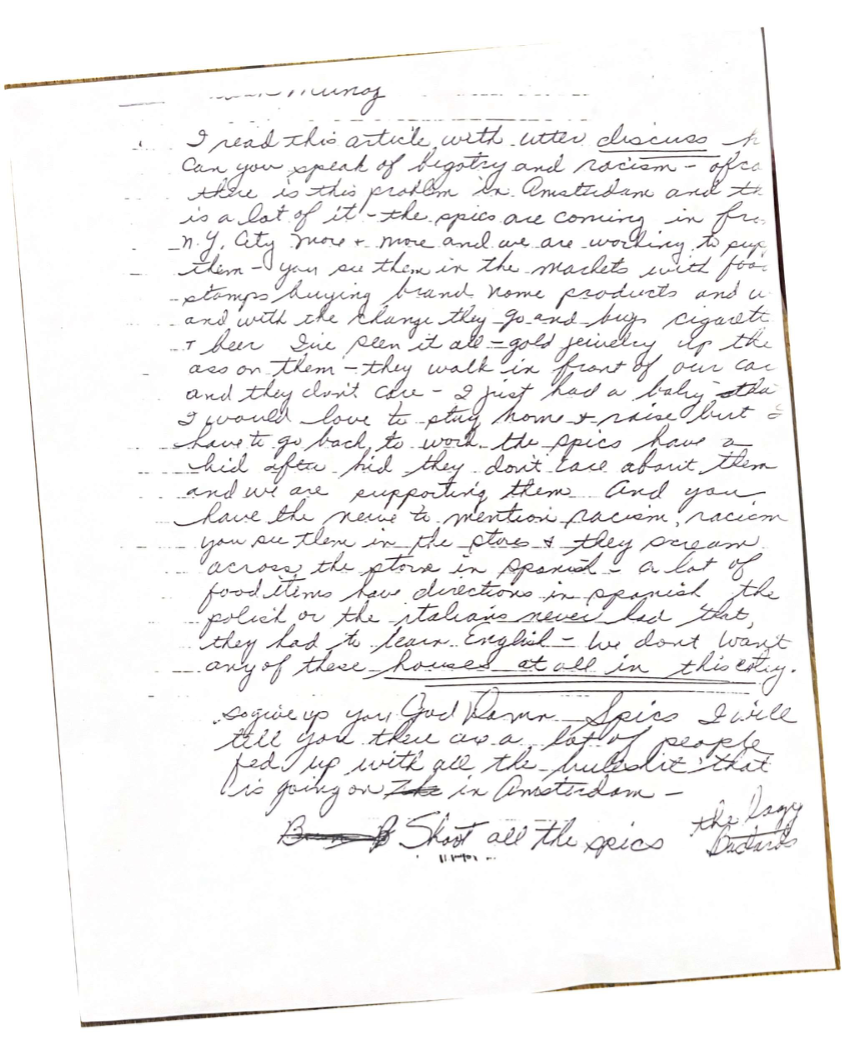
The author was scapegoating Spanish-speaking immigrants for the city’s economic decline, which felt especially heavy in the 1980s in the context of textile factory closures. Ladan’s archival intuition turned efforts to silence Latino voices into historical testimony.
For generations, Latino immigrants — mostly from Puerto Rico — came to Amsterdam to work in the cities’ then-famous carpet mills, support their families, and build better lives, often amid economic and environmental displacement on the island. In Amsterdam, Nuestra Historia is documenting these stories through archival recovery, oral history interviews, and public scholarship. At a moment of book bans, restrictions on speech, and rising anti-immigrant politics, preserving these histories is also a form of public education: a way to challenge the gaps in historical knowledge that allow prejudice and harmful public policy to flourish.
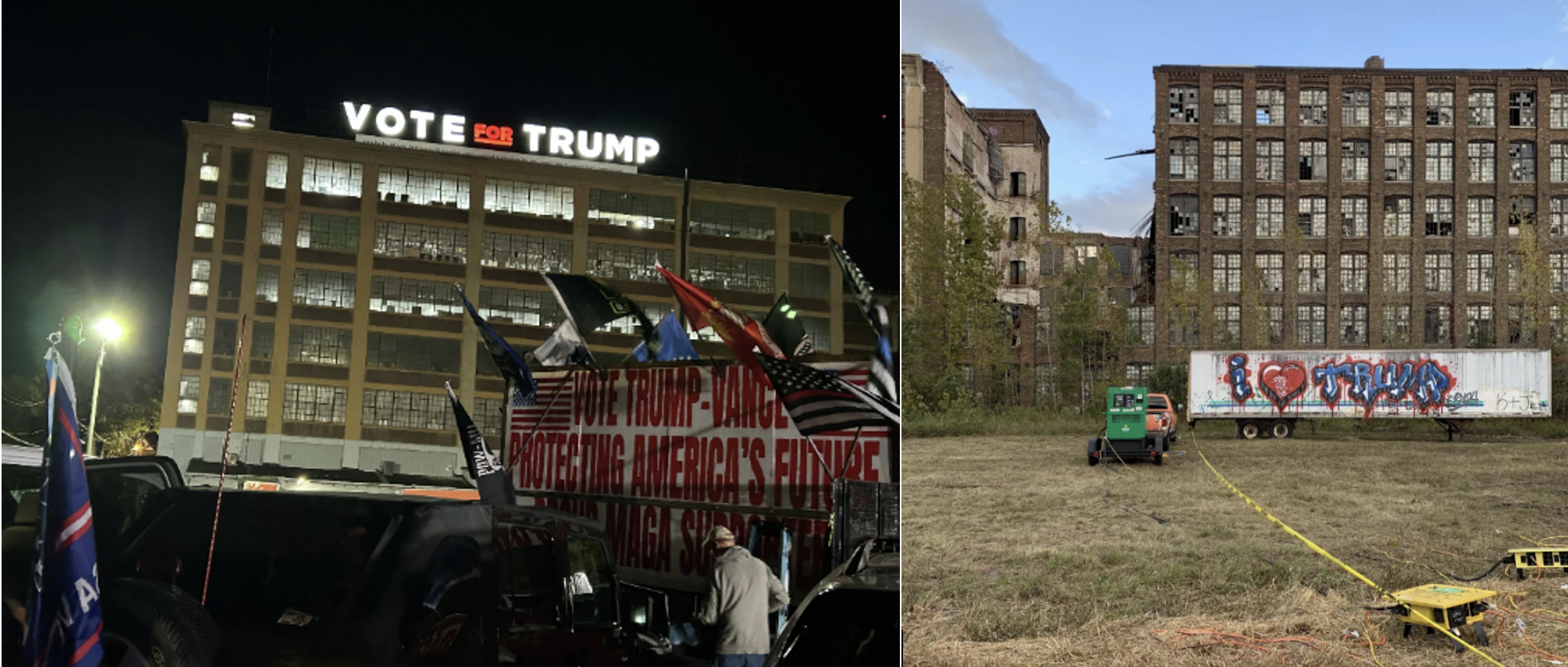
The stakes of that work are visible across Amsterdam’s landscape. The anti-immigrant politics preserved in Centro Cívico’s files have not disappeared, nor has the tendency to blame migrants for economic decline. Today, a massive illuminated “VOTE FOR TRUMP” sign hangs above the shell of the former Fownes knitting mill, while nearby, amid the remnants of the Mohasco Mills complex, an abandoned container is adorned with graffiti that reads, “I (heart) Trump.” The ruins of industries that once employed generations of Amsterdamians have become a stage for politics promising restoration through nationalism and exclusion.
Against that backdrop, preserving stories like Nidsa’s shows another history of economic decline and migration: one centered on survival, mutual aid, family, and the communities people build when capitalism fails to provide basic economic stability.