Designer Babies or Parental Choice? Exploring Ethical Perspectives on Polygenic Embryo Screening
October 28, 2026

People

Googie Karrass
ERI/PS2 Public Research Fellow
Googie Karrass (she/her) is a PhD candidate in Cultural Anthropology. Her dissertation examines polygenic embryo screening and how it is reshaping ideas about heredity and human difference, as well as the reproductive imaginaries that surround them. She is particularly interested in the ways that genomic frameworks are taken up in political projects and the porous boundaries between political and scientific and public discourse. Googie is a 2026 ERI/PS2 Summer Fellow.
On the quiet Wednesday afternoon before Thanksgiving in 2025, I found myself on the platform of Broadway–Lafayette station as commuters rushed by. I had come to see the ad campaign put up by the consumer genetics start-up Nucleus Genomics and gauge the public’s reaction. Ads for their IVF service highlighted polygenic embryo screening (PES), also called PGT-P, a controversial new genetic screening method that claims to assess embryos for complex traits. These range from conditions like heart disease to non-medical traits like IQ and height. The provocative campaign included posters emblazoned with the site “pickyourbaby.com” and invited viewers to “Give your baby the best start,” “Build generational health,” and proclaimed “IQ is 50% genetic.”
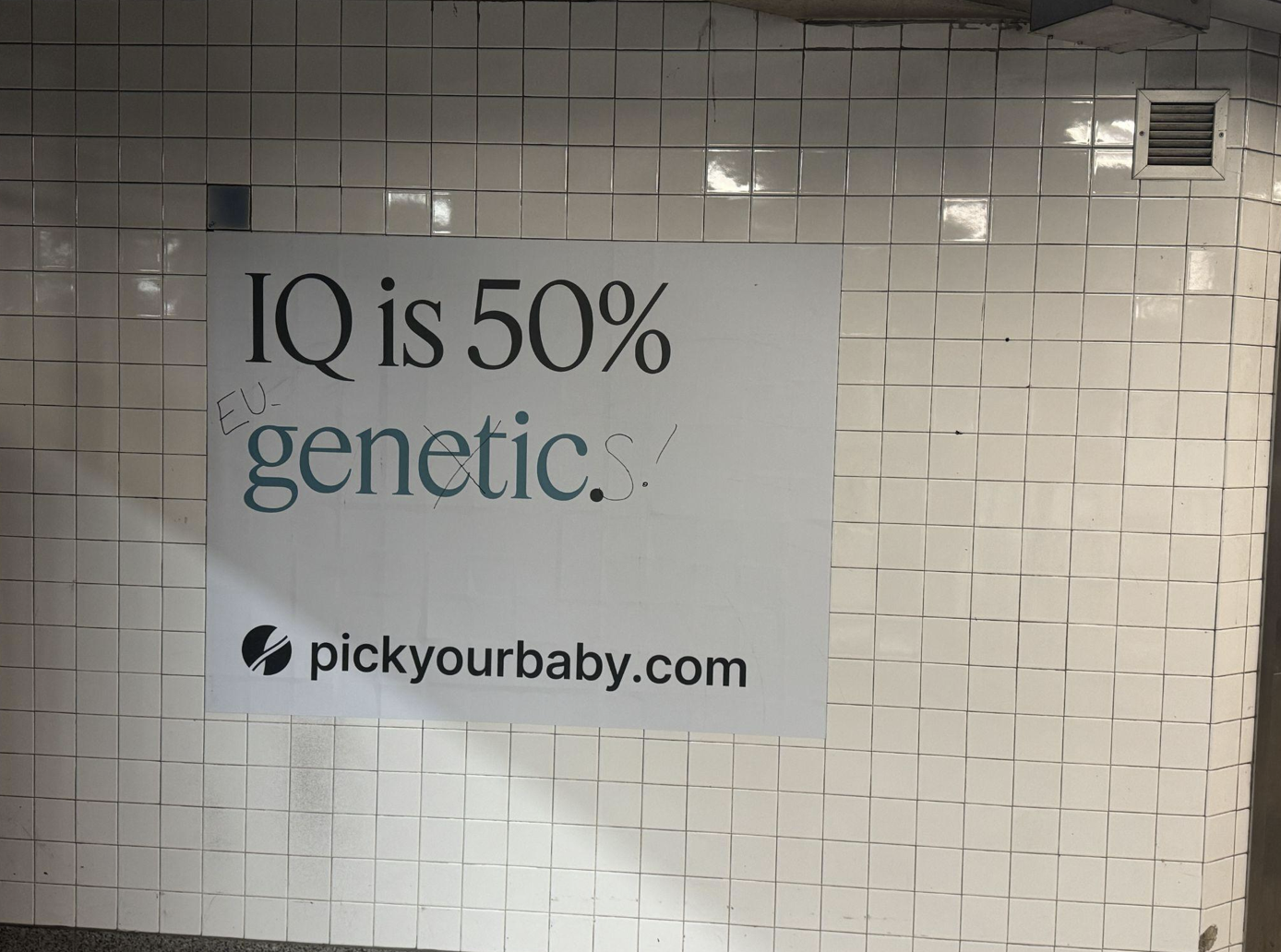
Speaking with passersby I was met with perspectives I had encountered throughout my dissertation research on this technology. While some thought PES was a form of eugenics, as the writing on the ads themselves make clear, many were optimistic that, like other genetic and reproductive technologies, it could positively impact people’s lives by potentially eliminating severe genetic conditions. Others emphasized choice, saying it was up to parents to decide if they wanted to screen their children for things like IQ. The question of whether PES can reliably predict complex traits—something experts dispute—and the broader social impact of using genetic technology to classify and select for human attributes were largely sidelined.

With the support of the ERI/PS2 fellowship, I explored these ethical positions in a chapter of my dissertation Choice over Chance: Polygenic Embryo Screening and the Postgenomic Politics of Heredity. I analyzed data collected through fieldwork and interviews, focusing on the ethical frameworks articulated by parents, genetic counselors, critics and the marketing campaigns of companies offering PES. I reviewed academic literature on choice-based genetic technologies and on what some scholars describe as liberal eugenics.
This work informed revisions to a forthcoming article developed for a Wenner-Gren Symposium and an analysis of nationally representative data on attitudes toward PES written in collaboration with a historian and demographer. This research also forms the basis of public-facing work, including a primer on PES I plan to distribute through reproductive justice networks and a presentation developed for academic audiences in the sciences, like a conference of biological anthropologists later this year. Through these efforts, I hope to contribute to a public discussion of the unsettled science behind this technology and the potential resurgence of genetic determinism—ethical concerns that can be overshadowed by an emphasis on personal choice and optimism about the potential of genetic technology to address, or even solve, complex human problems.