People

Guillermo Sardi Garcia
ERI/PS2 Public Research Fellow
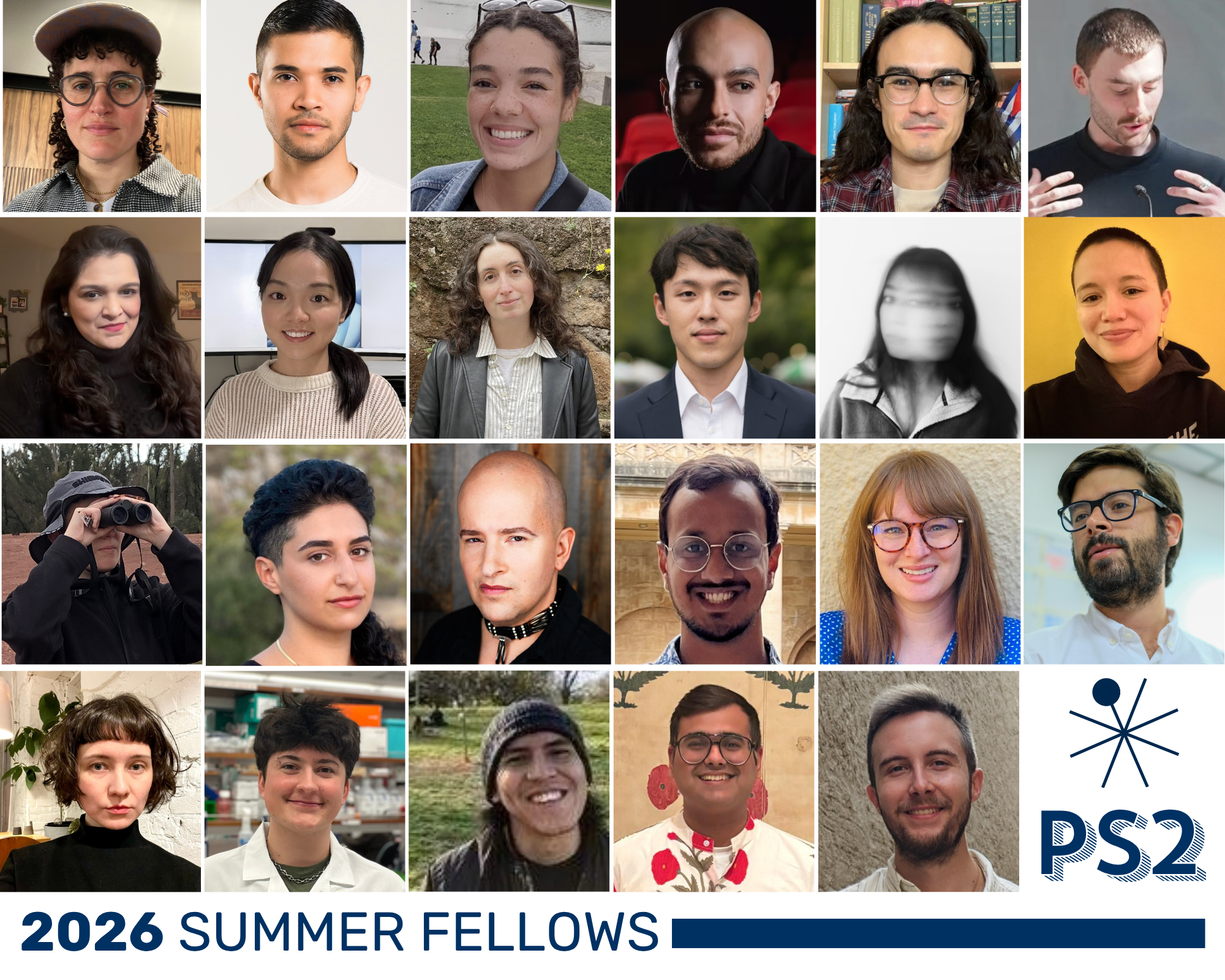
Guillermo Sardi is a PhD candidate in the Department of Political Science. His research focuses on the intersection of democratic backsliding, criminal governance, and state extralegal violence. He teaches at Lehman College and Fordham University on topics related to democracy, conflict, and security studies. Guillermo is a 2026 ERI/PS2 Summer Fellow.
“Here, authoritarianism has a thousand faces,” a young Guatemalan politician told me during
my first interview this summer.
The phrase stayed with me as I traveled through Guatemala City and Bogotá with the
support of the ERI/PS2 Summer Public Research Fellowship. Across 52 interviews, I was
trying to understand why these democracies have endured despite serious attempts to
weaken their basic rules.
In Guatemala, prosecutors and other political actors challenged the 2023 presidential
election and threatened the transfer of power to Bernardo Arévalo. In Colombia, a
referendum effort would have allowed then-president Álvaro Uribe to seek a third
consecutive term before the Constitutional Court stopped it in 2010.
My interviews pushed me to think about democracy less as something located only in
courts or presidential palaces, and more as a system sustained by many centers of political
authority. In Guatemala, longstanding Indigenous authorities, including the 48 Cantons of
Totonicapán, became central to defending the 2023 election results. In Colombia, the
Constitutional Court has constrained presidential power, while the Mothers of Soacha have
demanded accountability for young men killed by members of the military and falsely
presented as combatants.
These actors are very different. That is precisely what interested me. When political
authority is dispersed among courts, local governments, Indigenous authorities, social
movements, and other organizations, concentrating power may require confronting many
centers of resistance at once.
But having “a thousand faces” is not automatically a democratic virtue. Fragmentation
can also reflect deep inequalities, particularly where state and non-state violence shape
political life and communities have had to organize because the state failed to protect them.
That tension is what I brought back from the summer: democracy may survive not
only because its formal institutions endure, but because its defenses are spread across
many different actors. If authoritarianism has a thousand faces, perhaps democracy does
too.