WSQ Call for Papers: Indigenous Feminist Pedagogies
Deadline
July 31, 2026
at 12:00 AM
As a partner of Women Studies Quarterly (WSQ), the Center for the Humanities is excited to share this call for papers for a fall 2027 issue: WSQ: Indigenous Feminist Pedagogies, which will be co-edited by Cindy Tekobbe, Alanna Frost, and Heather N. Hill.
Issue Editors
CINDY TEKOBBE, University of Illinois Chicago
ALANNA FROST, University of Alabama in Huntsville
HEATHER N. HILL, Northwestern Missouri State University
“Hey, listen up, little fucker, I’m trying to give you some ancestor teachings here!” —William “Spirit” Knifeman, Reservation Dogs
This special issue of Women’s Studies Quarterly seeks contributions from Indigenous and First Peoples and their accomplices and allies working on or toward Indigenous feminisms, feminist rhetorics, and feminist pedagogies. Specifically, we seek contributions that push back against colonial ways of teaching and employ decolonial research methods. We use this CFP to invite authors to present scholarship and creative works that specifically employ decolonial, anti-colonial, indigenous, and feminist pedagogies to encourage social justice work in our teaching.
As Indigenous scholars have argued (Robinson et al. 2019; Stewart-Ambo and Yang 2021; Riley Mukavetz and Tekobbe 2022), while universities might be willing to offer land acknowledgements, these don’t necessarily interrogate or disrupt the academy’s colonial roots. Additionally, universities hold large collections of Indigenous cultural items, ancestral remains, and archival data while failing to align or comply with data sovereignty and the Native American Graves Protection and Repatriation Act (NAGPRA) (GIDA 2023). This lack of consideration of Indigenous knowledge and cultural practices is also reflected in teaching and learning. Our institutions center a Western epistemology that privileges the mind as the site of learning, whereas Indigenous epistemologies are “contextualized by what the physical, mental, and spiritual planes have to offer us” (Windchief 2021, 53). Thinking about epistemologies in this way centers the whole person, the land, and the communities, and disrupts colonial paradigms that commodify knowledge production (Tekobbe 2024, 6).
Although feminist methodologies, particularly intersectional methodologies, engage with decolonial methods and feminist scholarship, whiteness remains a dominant discourse, while BIPOC scholars are relegated to otherness (Munz, Hernandez, and Pauly 2023, 3; Moreton-Anderson 2021, 126). Admittedly, Indigenous feminisms are complex discourses as well, with some Indigenous people declining to identify as feminists because of the perceptions of feminism as a white woman’s space or a space where individualism supersedes community. Through all of this, Indigenous feminists and feminists employing Indigenous methodologies and pedagogies remain a persistent presence resisting the white, colonial patriarchy of the academy. However, if the academy is to become truly inclusive, we have to reject the colonial pressures of white, heteropatriarchal academic discourse; we must disrupt the dominant discourse and push back against the stock story of what the academy is and should be (Martinez 2020). This can be accomplished through scholarship that resists traditional forms, such as counterstory and testimonios, and through explicitly anticolonial teaching practices. This special issue proposes that Indigenous pedagogies are one approach to creating teaching that is inclusive, culturally safe, and respectful, and classrooms that are sites of “political resistance, integrity and moral responsibility” (Moodie et al. 2022, 84.). This special issue of Women’s Studies Quarterly will be a collection of pedagogical articles and creative works that center Indigenous feminist methods and approaches to teaching and mentoring.
We know that marginalized peoples have been silenced or not allowed to tell their own stories. Our hope is that our collection will provide space for Indigenous Americans (broadly defined) and other scholars of feminist pedagogy to discuss how they are decolonizing their classrooms.
Themes that this volume is interested in addressing include:
- Empirical/primary research on indigenous feminist pedagogy
- Theoretical illustrations of decolonial classroom practices and feminist pedagogy, particularly those grounded in case studies
- Descriptions of decolonial classroom practices
- Course designs
- Counterstories of Indigenous feminist resistance in the classroom
- Creative applications of Indigenous pedagogy and practice
Possible questions that submissions could answer include:
- What does an anticolonial classroom look like?
- How can Indigenous experience inform classroom practices and course design?
- What does classroom research that attends to Indigenous data sovereignty look like?
- How can feminists confront settler-colonial heteropatriarchy in curriculum design?
- What forms might pedagogy take when unfettered from white heteropatriarchal expectations?
- How do gender fluidity and Indigenous notions of plurality that reject the rigidity of Western gender roles inform pedagogical practice?
- What are some creative modes of classroom practices that embrace diversity of thought and identity?
- How have counterstory, testimonios, and critical race theory or tribal critical race theory (Brayboy) worked to support a classroom ethic of care?
WSQ accepts submissions in all printable media, including academic articles, memoir, manifesto, literary fiction or other prose, poetry, and visual art. Especially encouraged to submit are scholars, artists, creative writers, and activists who themselves experience various forms of marginalization within nation-states in the Global North and Global South. Please note that WSQ peer-reviews are not performed by AI.
SUBMISSION GUIDELINES
Deadline: July 31, 2026
Scholarly articles should be submitted to WSQ.submittable.com. Upload one Word document that includes the anonymized, complete article. Directly in Submittable, not as an attachment, please write a cover page that includes the article title, abstract, keywords, and a short author bio. Remove all identifying authorial information from the file uploaded to Submittable. Scholarly submissions must not exceed 6,000 words (including un-embedded notes and works cited) and must comply with formatting guidelines at feministpress.org/submission-guidelines. For questions, email the guest issue editors at [email protected].
Artistic works (whose content relates clearly to the issue theme) such as creative prose (fiction, essay, memoir, and translation submissions between 2,000 and 2,500 words), poetry (3 poems maximum per submitter), and other forms of visual or documentation of performative artistry should be submitted to WSQ.submittable.com. Note that creative submissions may be held for six months or longer. We do not accept work that has been previously published. Simultaneous submissions are acceptable if the editors are notified immediately of acceptance elsewhere. For visual submissions please note that WSQ can only print in black and white. Visual artists are also asked to submit a document containing captions for all works (including title, date, and materials), an artist’s statement and a short bio, each 100 words or less. For questions, email the guest issue editors at [email protected].
For works that are difficult to categorize, including those that fall between academic articles and personal narratives or creative essays, please choose the hybrid works option on Submittable, and explain the nature of the work in your cover page. Please especially indicate whether the work requires academic peer review.
All submitters please note that if your submission contains images (including images embedded into a larger article or essay) please include them as separate attachments of 300dpi or more. Please also include a short bio and current email address [all submitters, directly onto the Submittable form, not as an attachment] as well as an artist’s statement and image caption [visual artists] or an abstract and keywords [academic submissions].
About WSQ
Since 1972, WSQ has been an interdisciplinary forum for the exchange of emerging perspectives on women, gender, and sexuality. Its peer-reviewed interdisciplinary thematic issues focus on such topics as Black Love, Solidão, Asian Diasporas, Protest, Beauty, Precarious Work, At Sea, Solidarity, Queer Methods, Activisms, The Global and the Intimate, Trans-, The Sexual Body, and Mother, combining legal, queer, cultural, technological, and historical work to present the most exciting new scholarship, fiction, creative nonfiction, poetry, book reviews, and visual arts on ideas that engage popular and academic readers alike. WSQ is edited by Shereen Inayatulla (York College, CUNY) and Andie Silva (York College and the Graduate Center, CUNY), and published by the Feminist Press at the City University of New York. Visit feministpress.org/wsq.
Related Events
Conversation, Reading & Celebration
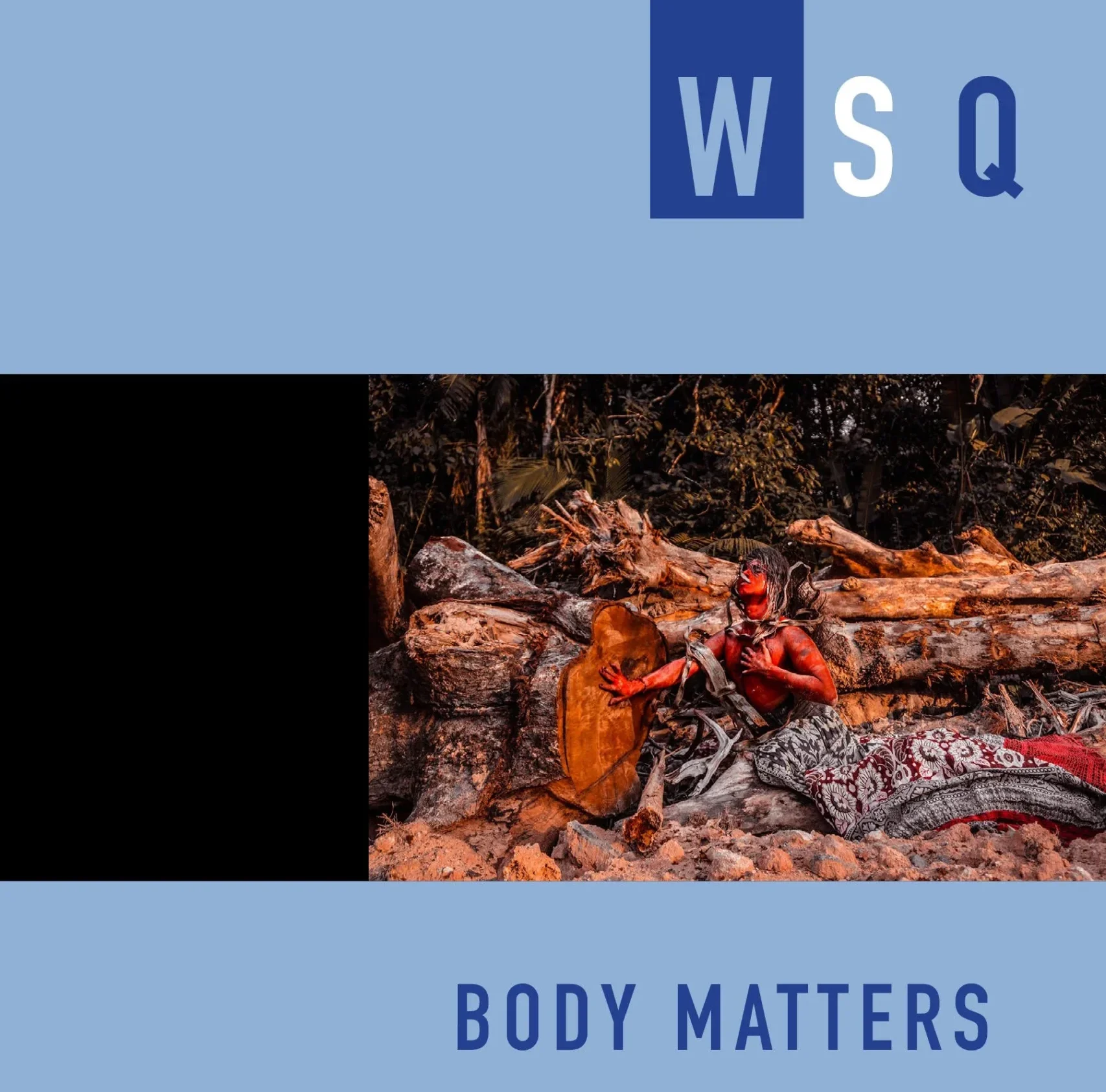
<em>WSQ</em> “Body Matters” Special Issue Launch
Conversation
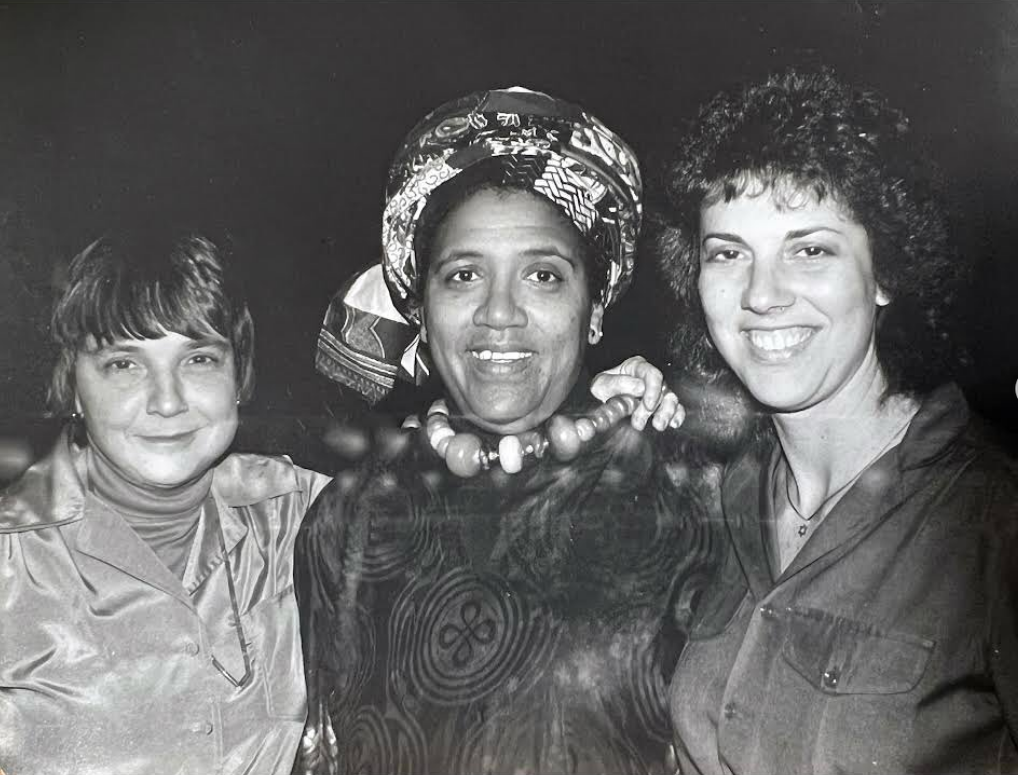
Binding Friendship: Megan Behrent Explores Audre Lorde and Adrienne Rich

Conversation & Reading
“The Hollow Pillars of the Law”: Chilean Poetry in the Time of Pinochet

Book Launch, Conversation & Reading
Feminists Reclaim Mentorship: a Reading and Celebration
Conversation
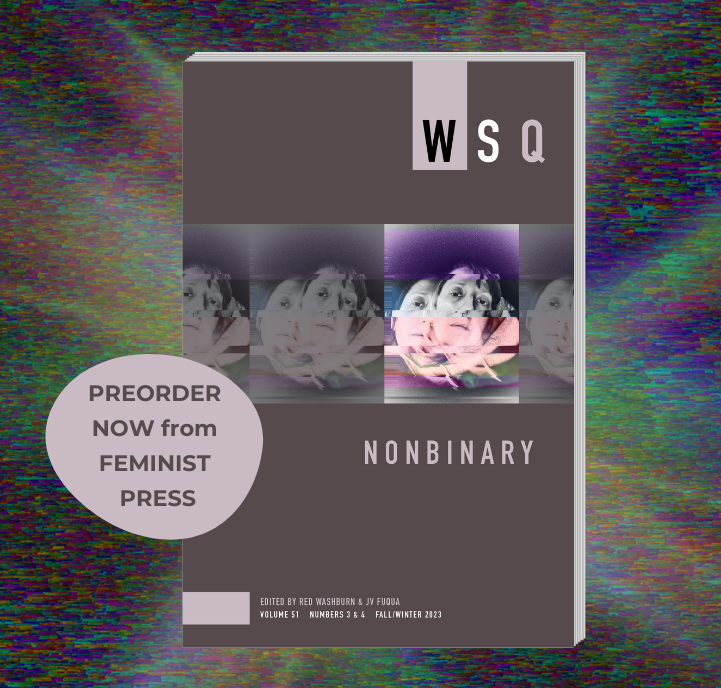
Book Salon: Red Washburn, “Irish Women’s Prison Writing: 1960s – 2010s”

Conversation & Reading
Inhabiting a Fluid Life in a Rigid World: A discussion Mattilda Bernstein Sycamore