Dissections: New Approaches in Middle East and North African Studies
Dissections: New Directions in Research on the Middle East and North Africa at the CUNY Graduate Center is a regularly convened seminar hosted by the Middle East and Middle Eastern American Center (MEMEAC) that aims to develop and showcase research in progress on the MENA region in a supportive and constructive environment.
Seminar participants from a variety of disciplines are encouraged to exchange ideas for further research, fostering lasting connections between students and scholars throughout the New York City region and beyond. The working group allows current students to familiarize themselves and network with scholarship from established scholars from around the city. As the materials shared are also works in progress, students learn how to engage with scholars to find constructive criticism on a range of topics related to the Middle East.
Invited paper presenters will circulate an original research paper that has not already appeared in print. The presenters will summarize the main points or problems of the paper and contextualize it. Discussion will then open to participants in the seminar, who include an interdisciplinary group of junior and senior faculty and graduate students from History, Anthropology, Political Science, French, and Comparative Literature. We host three or four dissections each semester.
Dissections and The Middle East and Middle East Americans Center (MEMEAC) at the Graduate Center will also be launching the inaugural Egypt Workshop, a two-day gathering designed to bring together graduate students, postdoctoral fellows, and faculty whose research engages Egypt across history, anthropology, sociology, and comparative literature. The workshop expands on the successful model of our existing Dissections series, scaling it from a single-session format into a full, dedicated day of sustained engagement with in-progress scholarship on Egypt. Check back for more info and ways to join the Egypt Workshop and the Dissections working group.
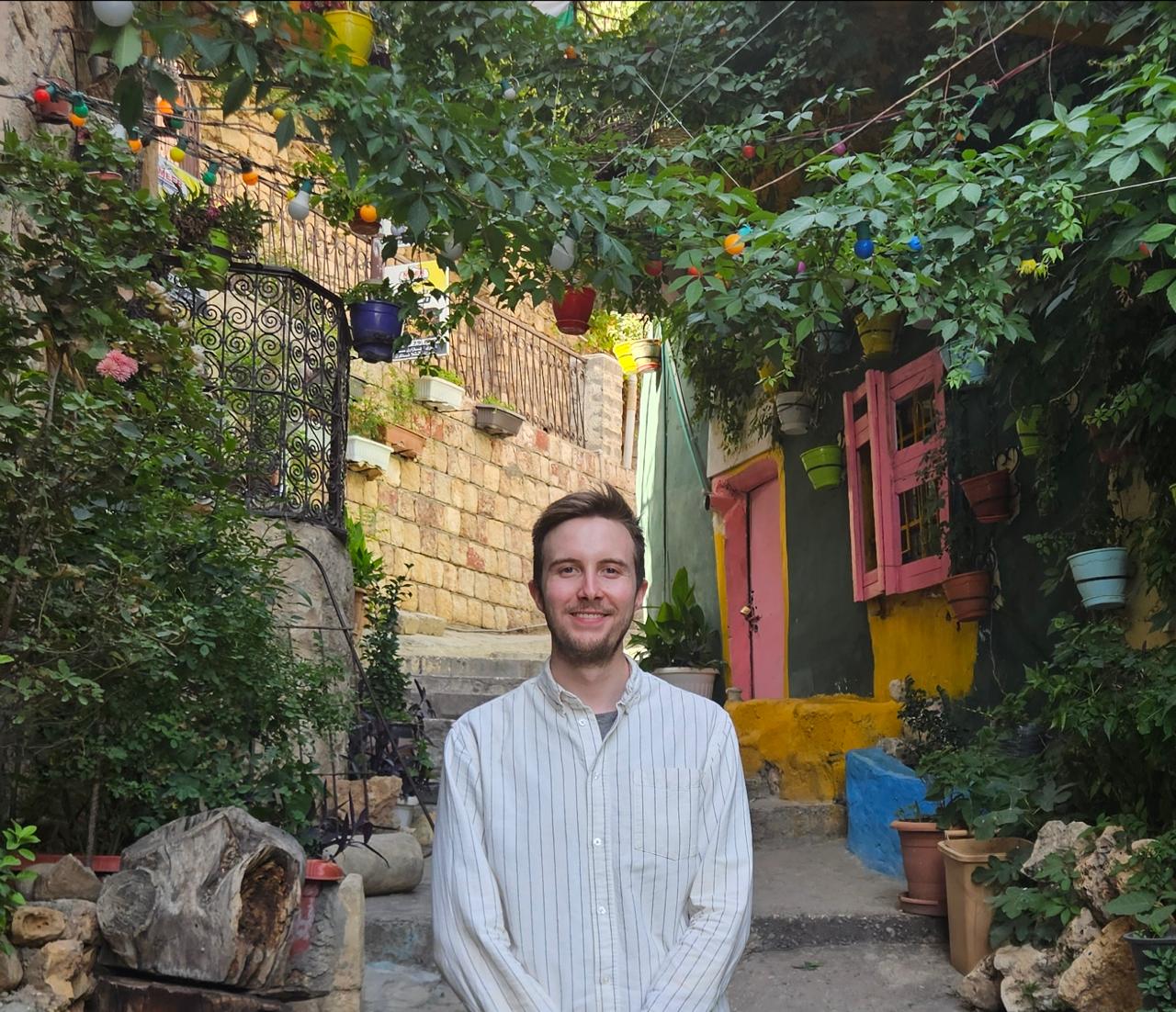
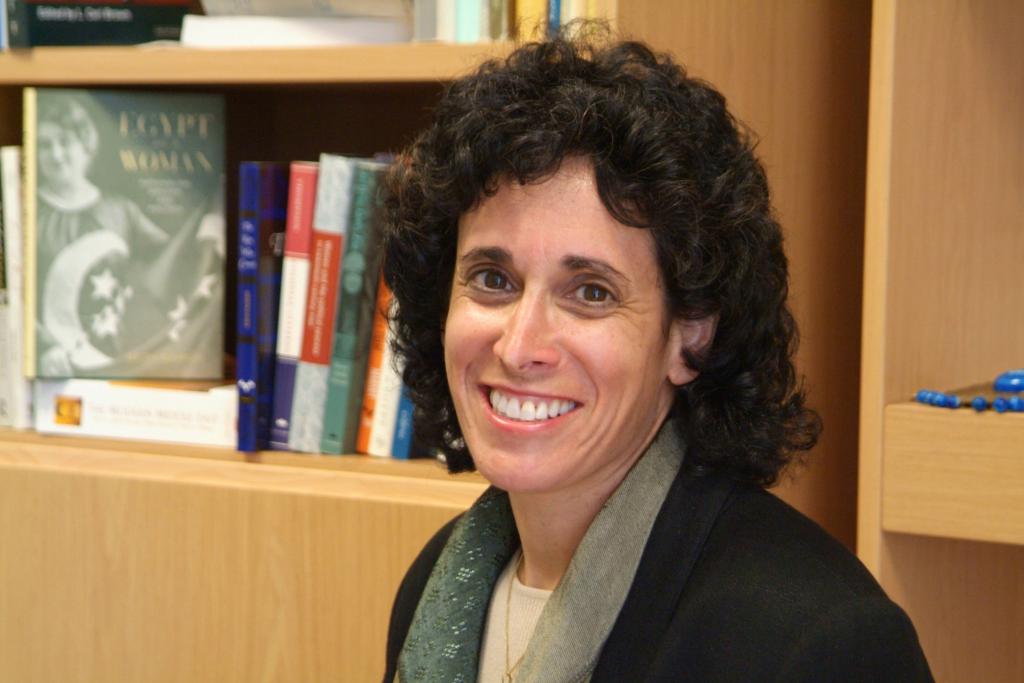
Working Group Facilitators
Dissections Working Group Meetings 2016 – 2026
Spring 2026
February 27 (Friday) at 3 PM – Simon Davis – “‘Too Small an Area for Two Kings’: British Civil-Military Relations in Mandate Palestine, the Great Arab Rebellion and Strange Case of High Commissioner Sir Arthur Wauchope c.1929-1938.”
March 13 (Friday) at 3 PM (virtual) – Ella Fratantuono – “Revising Redhouse: Producing a Turkish-English Dictionary in Cold War Türkiye.”
April 17 (Friday) at 3 PM – Alaa el-Shafie – TBD
May 8 (Friday) at 3 PM – Ozlem Goner – “Kurdistan in the SWANA Region: Entangled Layers of Colonialism and Revolutionary De-Colonization”
Fall 2025
Friday, October 31, 2025 at 3 PM (online)
Laura Goffman, “TBA”
AY 2024-25
Fall 2024
Name: Zeynep Gürsel: “An Ottoman Police Officer Behind the Camera”
Date: 09/20/2024
Participants: 15
Spring 2025
Name: Christine Philliou: “Between Hospitality and Belonging: Valide Han in its Many Contexts”
Date: 04/02/2025
Participants: 15
Name: Sara Rahnama: “Towards a New History of Arab Girlhood”
Date: 04/11/2025
Participants: 15
Name: Michelle Campos: “Between Census Statistics and Census Stories: Deep Mapping and the Social History of Late Ottoman Jerusalem”
Date: 05/09/2025
Participants: 15
Friday, April 11, 2 PM
Professor Michelle Campos (Penn State University)
Friday, May 9, 2 PM
AY 2023-24
Fall 2023
Name: Sara Pursley: “Insurgent Temporalities and Law without the State: Iraq between the Ottoman and British Empires”
Date: 11/27/2023
Participants: 15
Name: Arbella Bet-Shlimon: “Iraq’s Revolutionary Moments”
Date: 12/07/2023
Participants: 15
Spring 2024
Name: Jessica Winegar: “The Paradox of Promoting Social Change in Egypt: Conservative Aesthetics on the Eve of the 2011 Uprising.”
Date: 04/05/2024
Participants: 15
AY 2022-23
None
AY 2021-22
NO DISSECTIONS, on pause due to Sawyer Seminar
AY 2020-21
Fall 2020
Name: Shehab Ismail (MPIWG-Berlin) – “”A Matter of Efficiency: Engineers Debating Growth in Colonial Cairo””
Date: Friday, October, 30 2020, 10:00 AM – 12:00 EST
Participants: 20
Name: Pascale Ghazaleh (AUC) – “Contested Rights: Conflicts over Ownership of Resources (Egypt, Nineteenth and Twentieth Centuries)”
Date: Friday, November, 20 2020, 10:00 AM – 12:00 EST
Participants: 18
Name: Alia Mossallam (EUME) – “Work on the Aswan High Dam – between propagandist depictions, and stories of the builders’ archiving project”
Date: Friday, December, 11 2020 – 10:00 AM – 12:00 EST
Participants: 22
Spring 2021
Name: Lucie Ryzova, “The Disenchanted Eye: Photography, Vision, and Gender in Colonial Egypt”
Date: Friday, March 5, 2021 at 11:00 AM
Participants: 15
Name: Sara Farhan, “Pedagogies and Penicillin: Medical Education and Nationalism in the Age of Antibiotics in Modern Iraq, 1941-1956”
Date: Friday, March 26, 2021 at 11:00 AM
Participants: 18
Name: Gülhan Balsoy, “Female Villains in Late Ottoman Crime Novel: Anxieties of Gender and Nation”
Date: Friday, April 16, 2021 at 11:00 AM
Attendance: 16
AY 2019-20
Fall 2019
Name: Prof. Abed Takriti (University of Houston): “The Arab Left “From the Rumbling Ocean to the Revolutionary Gulf””
Time: October 4th, 2019
Participants: 21
Name: Prof. Mohamed Amer-Meziane (Columbia University): “The Reform of Islam and the Making of Tribes: Secular Faces of Association in Colonized Algeria.”
Time: October 18th, 2019
Participants: 14
Name: Prof. Kathryn Schwartz (University of Massachusetts, Amherst): “Popularizing a Government Ware Meant to Edify”
Time: December 13th, 2019
Participants: 18
Spring 2020
Name: Professor Mandana Limbert (CUNY): “Home is Where Your Soul Rests: Prayer, Passports, and Homeland between Oman and Zanzibar”
Time: February 21st, 2020
Participants: 16
AY 2018-19
Fall 2018
Name: Prof. Burcak Ozludil (New Jersey Institute of Technology): “Digital Spatial and Temporal Analysis in Ottoman History”
Time: Wednesday, October 17th, 2018, 4:30 PM
Participants: 21
Name: Professor Marc Michael (NYU): “The Politics of Rurbanization and the Egyptian Society of the Muslim Brothers”
Time: Wednesday, November 7th, 2018, 4:30 PM
Participants: 14
Name: Prof. Shareah Taleghani (Queens College, CUNY): “Metafiction in the Arabic Prison Novel”
Time: Wednesday, December 5th, 2018, 4:30
Participants: 16
Spring 2019
Name: Professor Zoe Griffith (Baruch, CUNY): “Orientalism and the Tragic Archive: locating ordinary Ottomans in the history of capital in the 18th century eastern Mediterranean”
Time: Friday, February 2nd, 2019, 4:00 PM
Participants: 16
Name: Professor Mana Kia (Columbia): “Imaginative and Material: Contexts of Mobility across the early modern Persianate”
Time: Friday March 1st, 2019, 4:00 PM
Participants: 12
Name: Prof. Ziad Abu-Rish (Ohio University): “Getting the Vote: Suffrage and the Women’s Movement in Post-Independence Lebanon”
Time: Friday April 12th, 2019, 4:00 PM
Participants: 16
AY 2017-18
Fall 2017
Name: Elizabeth Holt (Associate Professor of Arabic, Bard College): “Palestine and the Hermeneutics of Suspicion: Ghassān Kanafānī, Arthur Koestler, and the Cold War”
Time: Friday, October 20th, 2017, 04:30 PM
Participants: 11
Name: Khatchig Mouradian (Lecturer in Middle Eastern, South Asian, and African Studies, Columbia University): “‘The Very Limit of our Endurance’: Unarmed Resistance in Ottoman Syria during WWI”
Time: Wednesday, November 8th, 2017, 04:30 PM
Participants: 12
Spring 2018
Name: Ilham Khuri-Makdisi (Associate Professor of History, Northeastern University): “Al-Bustani’s Arabic Encyclopedia and the Global Production of Knowledge in the Late Ottoman Levant”
Time: Friday, April 13th, 2018, 12:00 PM
Participants: 15
Name: Sherene Seikaly (Associate Professor of History, UCSB): “How I Met My Great-Grandfather: Archives and the Writing of History”
Time: Wednesday, April 25th, 2018, 04:30 PM
Summary: Prof. Sherene Seikaly presented her article in progress to a group of doctoral students, masters students, and faculty followed by a discussion and reception
Participants: 18
Name: Dana Sajdi (Associate Professor of History, Boston College): “In Defense of Damascus: The Genre of Prose Cityscapes (12th and 16th Centuries)”
Time: Friday, May 11th, 2018, 1:15 PM
Participants: 17
AY 2016-17
Fall 2016
October 7th, 11:15 AM-1:15 PM
Aaron Jakes (New School), “Beyond Methodological Cotton-Headedness,” with Samantha Iyer (Fordham) as discussant
October 21st, 11:15 AM-1:15 PM
Omar Cheta (Bard College), “Cairo in the mid-1800s: The Commercial Infrastructure of Autonomy,” with Stephanie Boyle (New York City College of Technology) as discussant
November 4th, 11:15 AM-1:15 PM
Jonathan Wyrtzen (Yale), “Reimagining Political Space: Jihads, Empires, and the Interwar Making of the Modern Middle East and North Africa,” with Simon Davis (CUNY) as discussant
December 2nd, 11:15 AM-1:15 PM
Sarah Ghabrial (Columbia), “Muslim conjugality on trial: Divorce and the incarceration of ‘rebellious’ wives in colonial Algeria, 1880-1930,” with Sara Pursley (NYU) as discussant
Spring 2017
February 24th, 11:15 AM-1:15 PM
Toby Jones (Rutgers) with Craig Daigle (City College) as discussant
“Energy and Geographies of War in the Persian Gulf”
March 10th, 11:15 AM-1:15 PM
Max Weiss (Princeton), “The Slow Witness: Syrian War Literature in Real Time,” with Chris Stone (Hunter College) as discussant
March 31st, 11:15 AM-1:15 PM
Neferiti Takla (Manhattan College), “Murderous Economies: Sex Trafficking and Political Economic Change in Alexandria, Egypt, 1914 – 1921,” with Sarah Ghabrial (Columbia) as discussant
April 28th, 11:15 AM-1:15 PM
Negin Nabavi (Montclair State), “Reading, Reading Rooms, and Print Culture in Early Twentieth-Century Iran,” with Ervand Abrahamian (Baruch) as discussant
Attempts to understand the variant paths of modernity in the Middle East and North Africa (MENA), and the relationship of the region to Europe and the United States, have produced a new body of scholarship focusing on the history of the environment, medicine, space, belonging, and related subjects. Intersecting with studies on religion and colonialism, this seminar aims to provide an opportunity to share empirical research and theoretical framings in order to push forward scholarly debate on the MENA region. View seminar programming by clicking on the following:
Dissections Spring 2015
Dissections 2014
Dissections 2012-2013
Dissections 2011-2012
Dissections 2010-2011