People

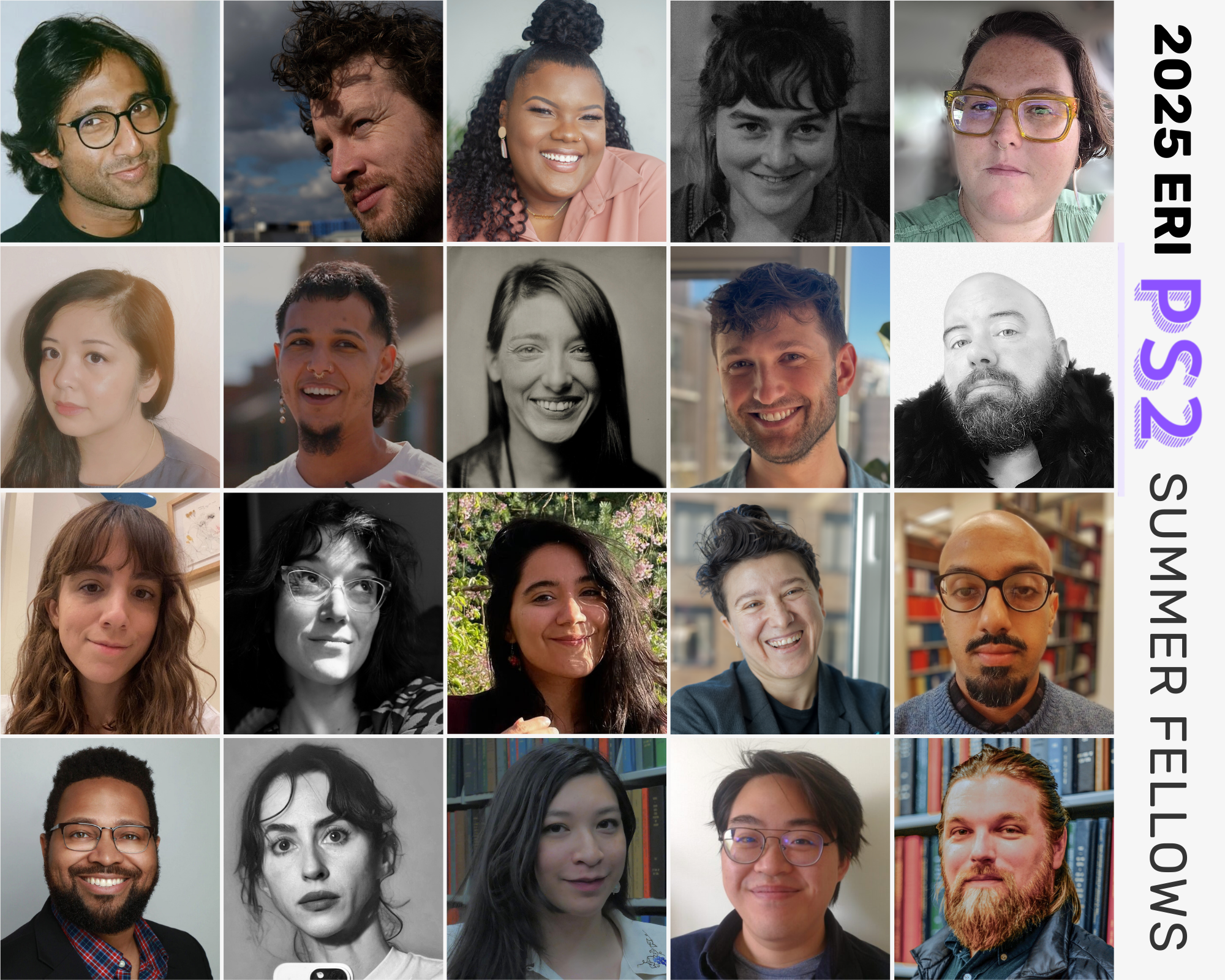
Tenn Joe Lim
ERI/PS2 Public Research Fellow
Tenn Joe Lim is a PhD student at the CUNY Graduate Center’s Geography program. He researches ocean geographies, land reclamation, and community infrastructures in Malaysia, specifically, how encroaching real estate and industrial pressures to terraform the sea are reshaping the lives of coastal communities. Tenn Joe is a 2025 ERI/PS2 Summer Public Research Fellow.
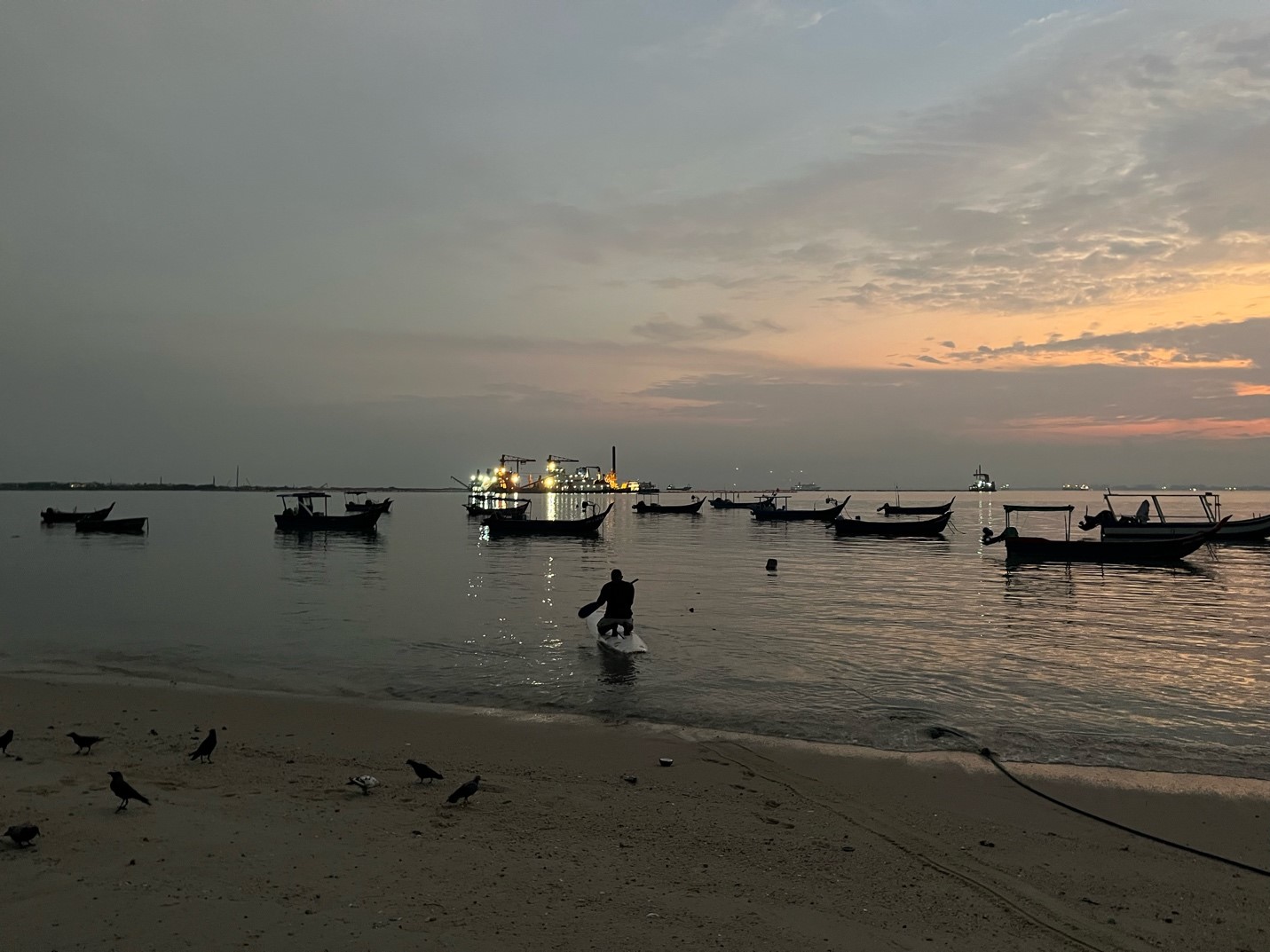
We stood in darkness, as we waited for the third member to arrive at the jetty. We were going to collect the crab nets close to the Penang Strait. One last cigarette before the crab-fisher heads out to ready the boat. It was 6am, and while most Penang-ites are still asleep or just about to wake up, the dredgers are already brightly lit, its engine roaring quietly as it terraforms the earth beneath the waters.
With the ERI/ PS2 Summer Public Research Fellowship, I traced the terraqueous development along the Straits of Penang, where land reclamation remakes sea space for its own development needs. In particular, I look at reclamation projects at three different places – Gurney Drive, Teluk Kumbar, and Jelutong – to understand how fishers and the broader public respond to these projects at different stages: Seri Tanjung Pinang at Gurney Drive (started in 1997), Penang Silicon Island at Permatang Damar Laut and Teluk Kumbar (started in 2023), and the proposed reclamation at Jelutong.

The coast of Penang has long served as the state’s urban growth machine. The postcolonial economic development strategy transformed Penang in the 1970s; concentrating industrial and logistics development along the coast that turned Penang into the “Silicon Valley of the East”. Today, driven by the twinned pressures of fiscal deficit in the state’s infrastructural needs and real estate developers’ thirst for profit-seeking speculation, Penang continues to convert the foreshore and its waters into vital tax revenue at the expense of the fishers that continue to live and work with the sea. I join the work of local NGOs such as Jaringan Ekologi dan Iklim (JEDI) and Penang Tolak Tambak, as well as urban scholars, Beng Lan Goh, Ban Lee Goh, Peggy Teo and Creighton Connolly, who centers local contestation of state-sanctioned urban visioning of Penang’s metropolitan future. Teo called this a kind of imagineering of Penang – where fantastical developments for Penang’s tourism and business elites hollow out the places that local residents use daily and hold dear.

Over the summer, I worked with various small-scale fishers to gather stories about their responses to the development projects, and to see the various community infrastructures and collaboration with civic-ecological groups in an effort to sustain their livelihood through fishing. What remains after reclamation, and how can we attune ourselves to the environmental precarity it produces?
The introduction of sand reclamation has altered the geography of some of these beaches – fishers complained that their recreational area is ruined by beach erosion and have resorted to conduct mini reclamations of their own; bagging up sand in bags in order to protect what little place that is left.