Mapping the national coordination of unaccompanied minors in France
November 10, 2025
People

Léa Coffineau
ERI/PS2 Public Research Fellow
Léa Coffineau is a PhD candidate in cultural anthropology at the Graduate Center. Her dissertation project focuses on the notion of “colonial debt” – a debt owed by the colonizer to the colonized – and on its manifestation in the political discourse of young West African migrants who claim the status of unaccompanied minors in France. Léa is a 2025 ERI/PS2 Summer Public Research Fellow.
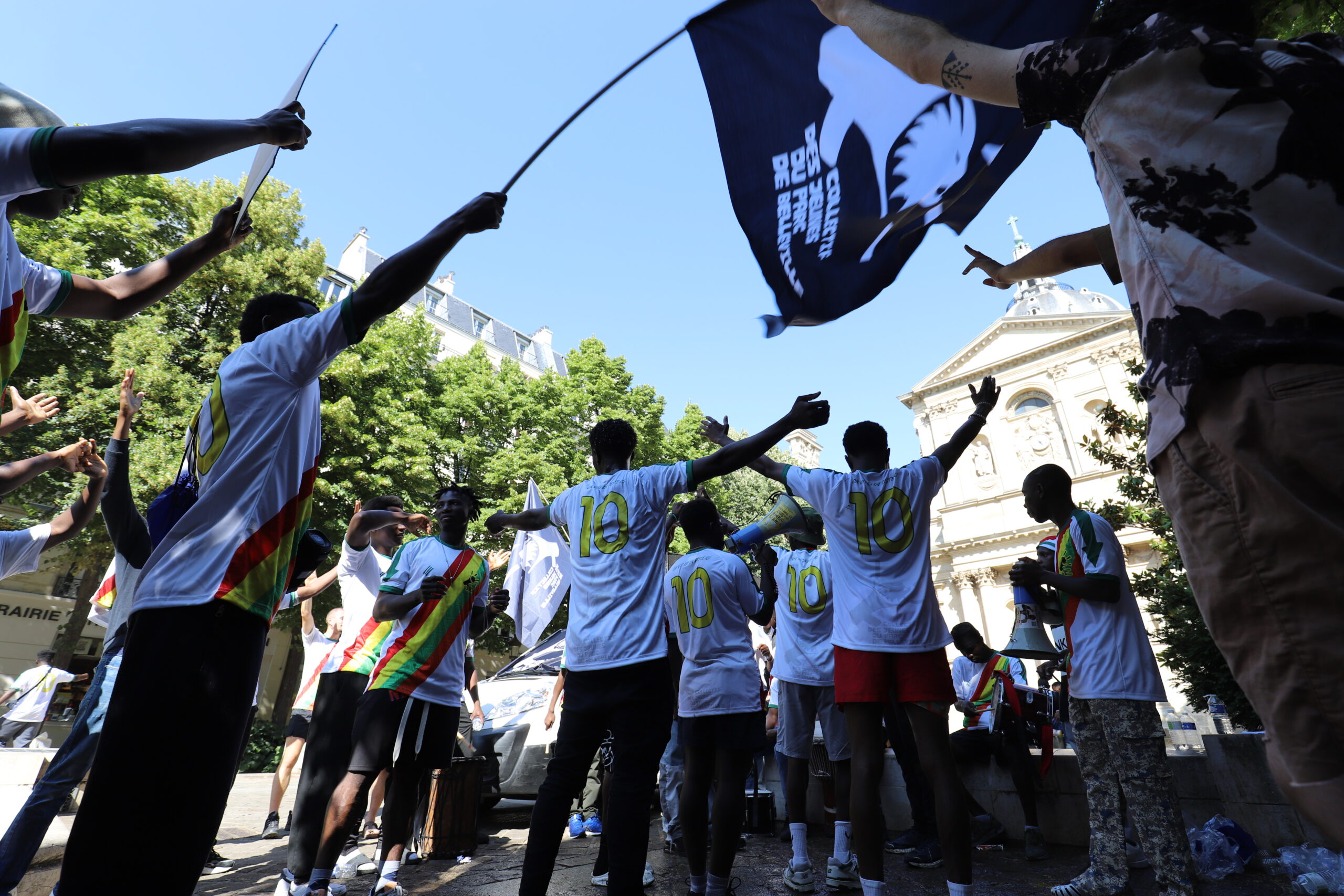
From June to August 2025, the ERI/PS2 Summer Public Research Fellowship allowed me to wrap up ethnographic fieldwork, catch up with key informants, and give back to my research community in the form of a mapping project. In 2024, I worked with young West African migrants recently arrived in the Paris region who had been denied the “unaccompanied minor” status and challenged the decision in court. During the months leading up to the review of their case by a juvenile court judge, they fall into a legal limbo where, neither children nor adults to the eyes of the French State, they are left to fend for themselves in the streets. Along with allied citizens, they organized into the Collectif des Jeunes du Parc de Belleville to demand that their rights to housing, education and healthcare be respected. Moreso, employing a discourse of colonial debt—a debt owed by France to its former colonies for the protracted exploitation of their land and people—they claim a right to stay legally in France. As the Collectif led increasingly mediatized rallies and occupations, it gained the support of political actors such as antifascist activists, worker unions, and even political parties, while striving to remain independent in its decision-making process.
This summer has provided me with the opportunity to witness and contribute to the emergence of a national coordination among such collectives. A few weeks before my arrival, delegates from all over the country gathered in Lille to share their local experiences and devise future strategies. On June 20, each collective called for a regional rally to demand unconditional access to education, as stipulated by French law. In Rouen, the youth collectif occupied the front lawn of the prefecture (institution representing the authority of the State in each département — French administrative division) for two months with the support of the socialist mayor of the city. Their occupation was regularly reported on regional television and drew the attention of local unions and political figures. After two months of camping under the rain without eliciting any reaction from prefecture officials, and under constant attacks from the far-right, the Rouen Collectif was offered temporary housing by the city in a gymnasium, thus finding itself caught in the usual battle between municipal and national powers over such responsibility. At the same time, the Collectif Binkadi youth of Marseille occupied a very busy square at the heart of the city for more than seven weeks.
As the number of young migrants denied minor status is rapidly growing, and their struggle for rights escalating, I collaborated with B., an informant and friend from the Paris collective, to build a map of the youth collectives arising in France’s cities, allied organizations, other safe addresses, and essential administrative services. The map will be shared with migrant youth as early as this Fall, as well as with volunteers posted at the French borders with Spain and Italy, so that they can effectively guide newcomers. Hosted on a free and technology-accessible platform, the map is designed to be regularly updated by migrant youth collectives themselves.