Culture and Representation in America: The Impact of CETA
Wed, Dec 9, 2026
6:30 PM–8:00 PM
Elebash Recital Hall, CUNY Graduate Center. Free and open to the public.
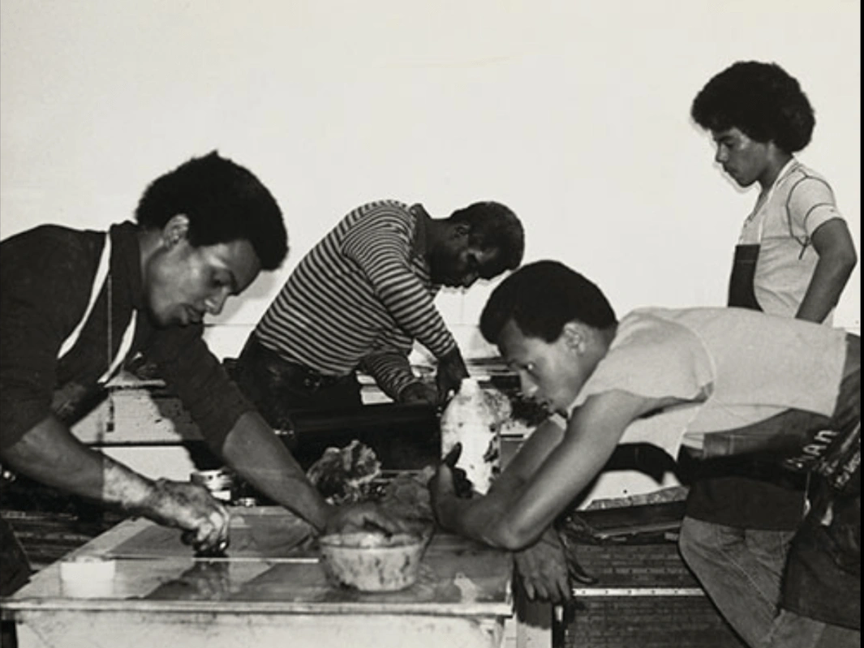
In tandem with the James Gallery’s exhibition ART/WORK: The Practice and Politics of CETA and the Arts, 1974-1981, join us for a panel discussion that looks at the legacy of a little-known government agency and it’s lasting footprint on the arts across the country.
Who gets to shape the artistic and cultural life of a community, and who gets to tell its stories? Between 1974 and 1981, the Comprehensive Employment and Training Act (CETA) employed more than 30,000 artists and cultural workers in nearly 200 cities, towns, and Indigenous territories across the United States. Although CETA was not passed with artists in mind, it created the most significant federally supported arts workforce since the New Deal’s WPA, and its impact extended far beyond the artworks produced during its lifespan. Inspired by the exhibition ART/WORK: The Practice and Politics of CETA and the Arts, 1974–1981 at the CUNY Graduate Center’s James Gallery, curators Molly Garfinkel and Jodi Waynberg join visual historian Drew Thompson and others to consider CETA’s legacy.
Co-hosted by the James Gallery and Public Programs at the CUNY Graduate Center and co-sponsored by the Center for the Humanities.
Please contact Jimmy Cok at [email protected] in advance for CART services or any additional accessibility requests or concerns for in-person events. This event will be livestreamed, and closed captions will be provided.
Related Events


Un-Fair Trades: Artistic Intersections with Social and Environmental Injustices in the Atlantic World

Conversation & Performance
A Sit-in at the Library: ’68 Revisited