People
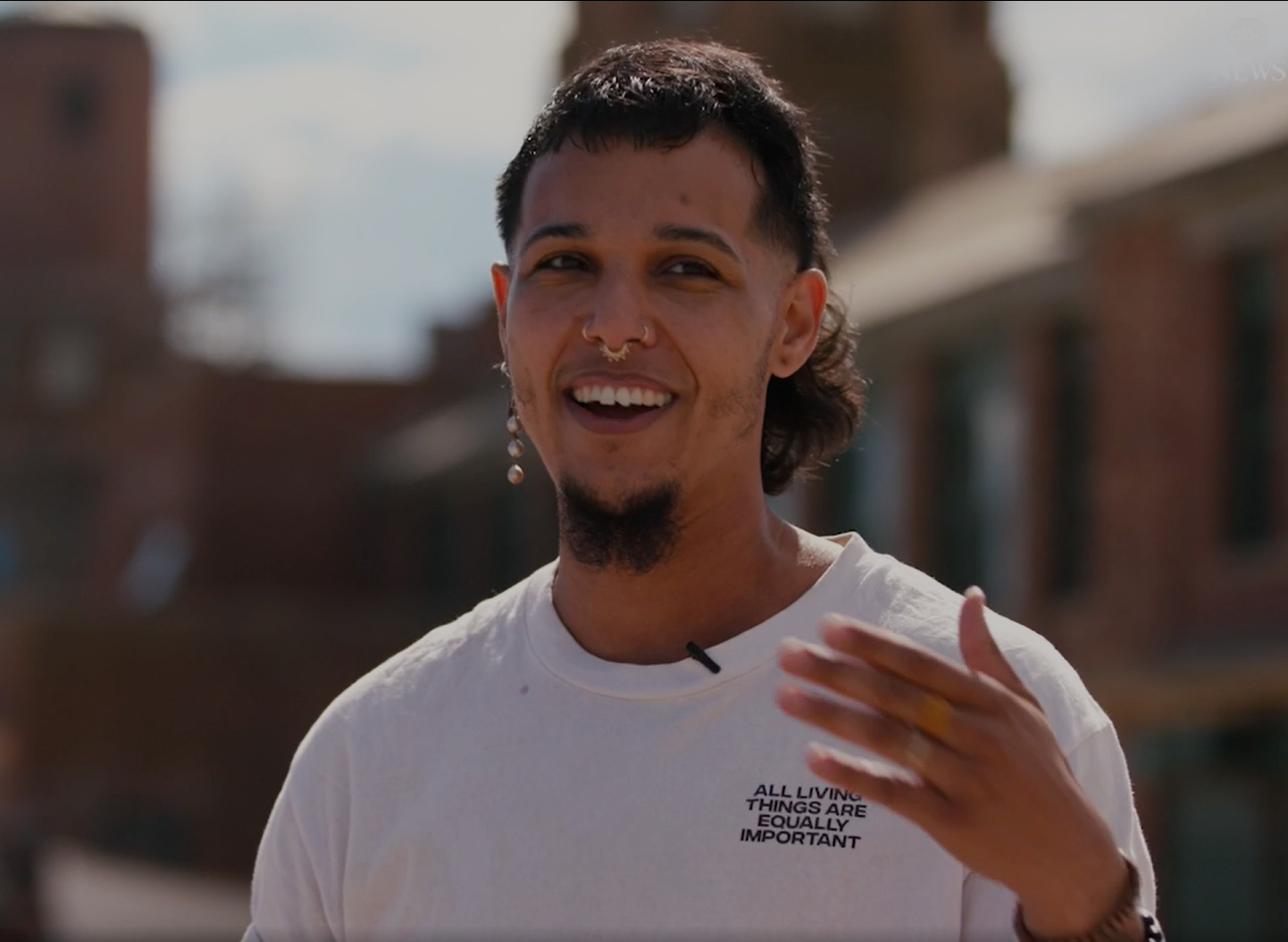
jah elyse sayers
ERI/PS2 Public Research Fellow
jah elyse sayers (they/them) is currently a PhD candidate in Earth & Environmental Sciences at the Graduate Center, CUNY. Their dissertation focuses on embodied, enacted, and relational placemaking in tension with public-space planning, research, and policy, focusing on the rapidly changing landscape of People’s Beach at Jacob Riis Park. jah elyse sayers is a 2025 ERI/PS2 Summer Public Research Fellow.
This summer, I applied for the ERI/PS2 summer fellowship to initiate and build out the Riis Beach Bloc Association, in collaboration with other members of the People’s Riisearch Group, as part of an ongoing practice of organizing-as-research-method. Like a block association, we aimed to build bottom-up power, work toward common goals, and build inroads to communication with government and other institutions. Unlike a block association, we are not residentially situated at the place where we operate—which is the historically queer section of Jacob Riis Park, located on the Rockaway Peninsula (NYC), and which has remained a stubborn place of queer and trans gathering since at least the 1940s. The “bloc,” then, refers to multiple people and groups coming together with a common interest (in this case, caring for each other and the beach) and is a nod toward the sense of home that many queer and trans people feel in this generationally queer public space.

At our first meeting, to build a shared sense of place, we asked participants to write out highlights, challenges, and turning points in the past ten years of queer Riis history and post them all together on a shared timeline. Participants surfaced memories of gatherings, collectively built memorials, policy changes, hostile politicians, storms, built and physical environment changes, park staff shortages, and guerilla approaches to disability access. We then invited a group discussion and share-out about sources of instability and existing care practices.
In this first meeting, recurring areas of action emerged: history, storytelling, and memory-keeping; infrastructure & access; political education & engagement; and safety. We instituted working groups in each of these areas.
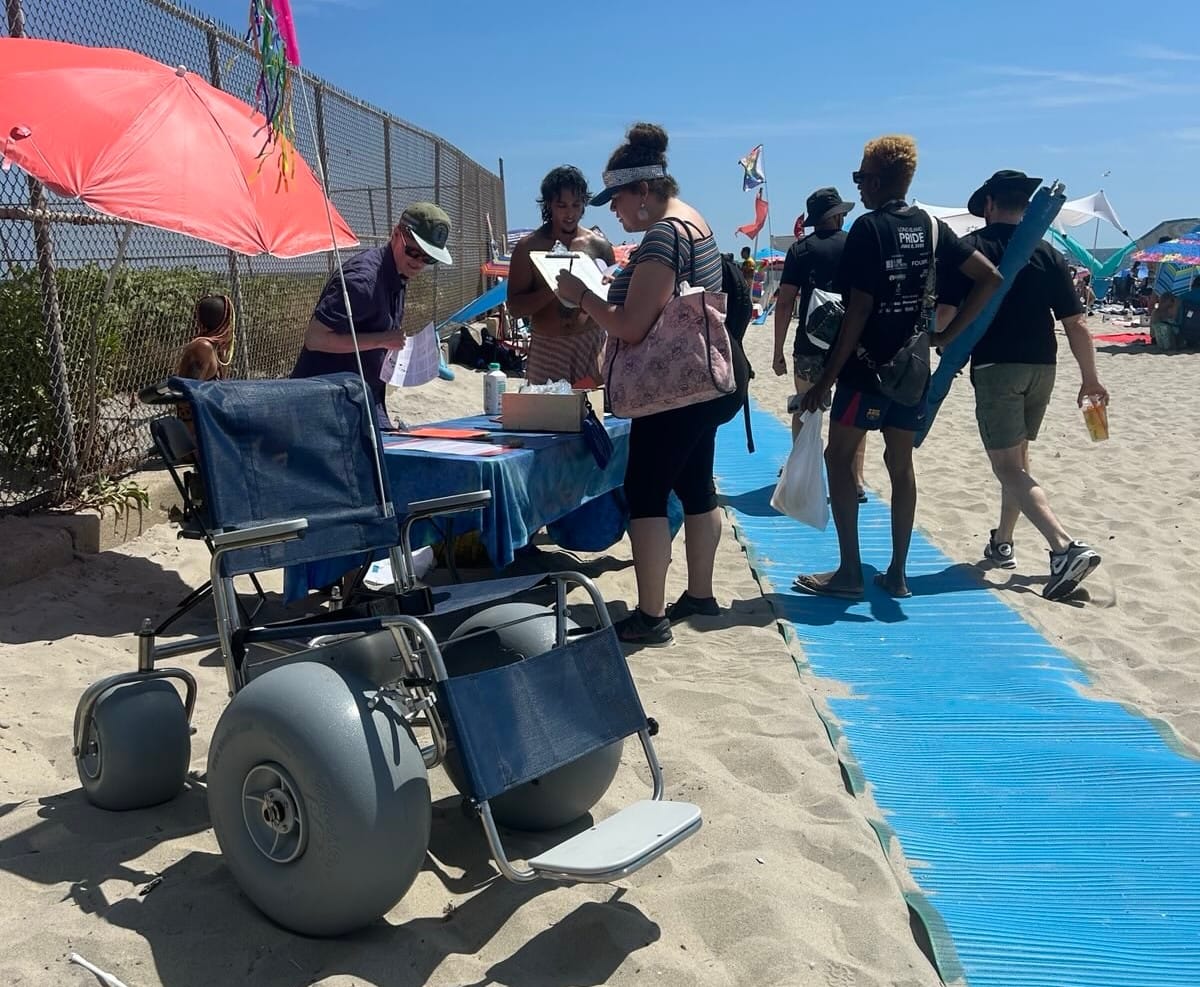
Monthly on the beach, we experimented with multiple forms of gathering. We facilitated a de-escalation training in response to concerns about policing, produced and disseminated physical zines (about erosion, how to recover towed cars — and avoid getting towed! — and tactics for keeping each other safe), offered beach wheelchair use, installed a community news bulletin, and participated in an end-of-season “Riis Pride” event organized by the nonprofit G.L.I.T.S., Inc. We used online tools rather than an on-site assembly for reporting out and collecting testimony about conditions and concerns.
Creating the container of the bloc association and inviting people into it produced new connections and collaborations which resourced both new initiatives and pre-existing efforts to support queer history and presence at Riis. In our conversations, people shared their practical experiences with navigating things like: social media surveillance; event permitting; in-person surveillance and harassment; the workings of government agencies and stewardship bodies; researching Riis’s history; and local issues and politics in the Rockaways—all the while drawing connections across these areas in order to strengthen our efforts and build on prior efforts. Putting these knowledges to work either collectively or in participants’ more individual efforts helped us refine what we knew, together, about the beach’s position in a complex network of institutions and learn how we and others might get things done, together, in Riis’s complex geography to preserve the lifeforce of this crucial queer space.