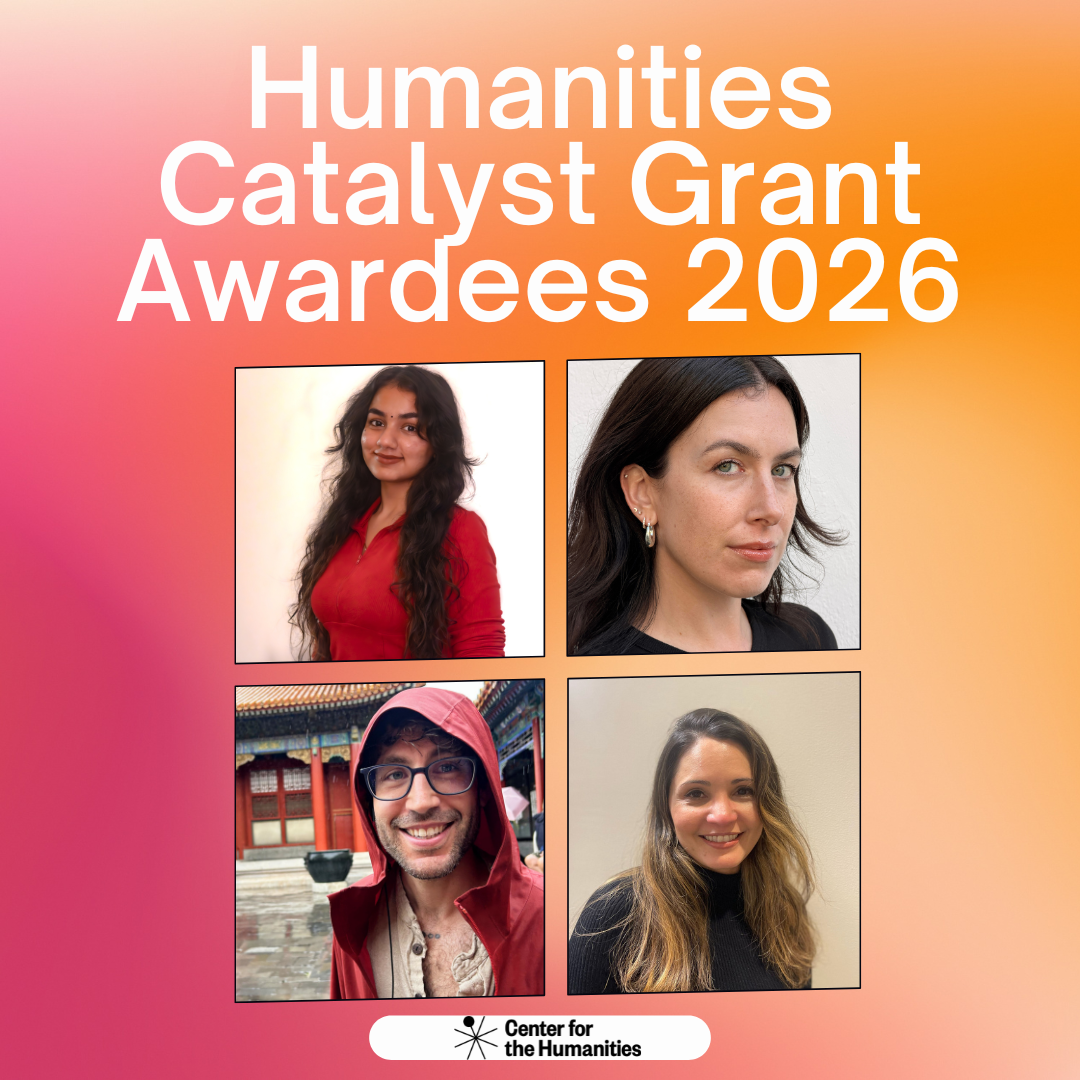
We are very pleased to announce the inaugural Humanities Catalyst Grant Awardees!
The Humanities Catalyst Grant supports original research, archival travel, and scholarly writing by English, History, Philosophy, and/or Art History Ph.D. students at the CUNY Graduate Center. Designed to bolster a rising generation of humanists in a rapidly changing academic landscape, the program provides resources that help emerging scholars advance ambitious projects and sustain robust humanistic inquiry.
Meet our 2026 Awardees and learn about their grant-funded projects and scholarship:
Meha Gupta
English

Meha Gupta is a doctoral student in the English Ph.D. Program at the Graduate Center, CUNY, where she explores the intersection of affect, history of science, digital humanities, and race. Her work has appeared in MUSE India, Jesuit Higher Education: A Journal, The Journal of Interactive Technology & Pedagogy, and ACM Hypertext. Her research is supported by several grants at the Graduate Center, including the Doctoral Student Research Grant, the Early Research Initiative, and the Provost’s Digital Innovation Training Grant. She is a GC Digital Fellow and a HASTAC Scholar and teaches in the Black and Latino Studies department at Baruch College. She also runs Sampoorna Edu, an online educational initiative aimed at providing research resources and mentorship to students in India.
“How does science feel to those historically excluded from its creation? Situated at the intersection of experimental writing, aesthetics, and science, my research project Confessions of a Quantum Subject investigates how marginalized writers and artists engage with quantum physics concepts. The project’s core argument is that presumed scientific neutrality often masks colonial histories, and that artists of color utilize experimental, processual writing to engage with the dense concepts. In doing so, they imagine a racial subjectivity that gets charted in the interplay between the body, aesthetic perception, and intellectual limits set by scientific racism. Through close readings of specific cultural objects—including the Einstein-Tagore correspondence, Jack Whitten’s Black abstractionist art and notes, and Amrou Al-Kadhi’s queer, psychedelic memoir—my research demonstrates how quantum physics becomes a radical space for subjective storytelling through affect in the 20th and 21st century.”
Gloria Pereira Caminha
History
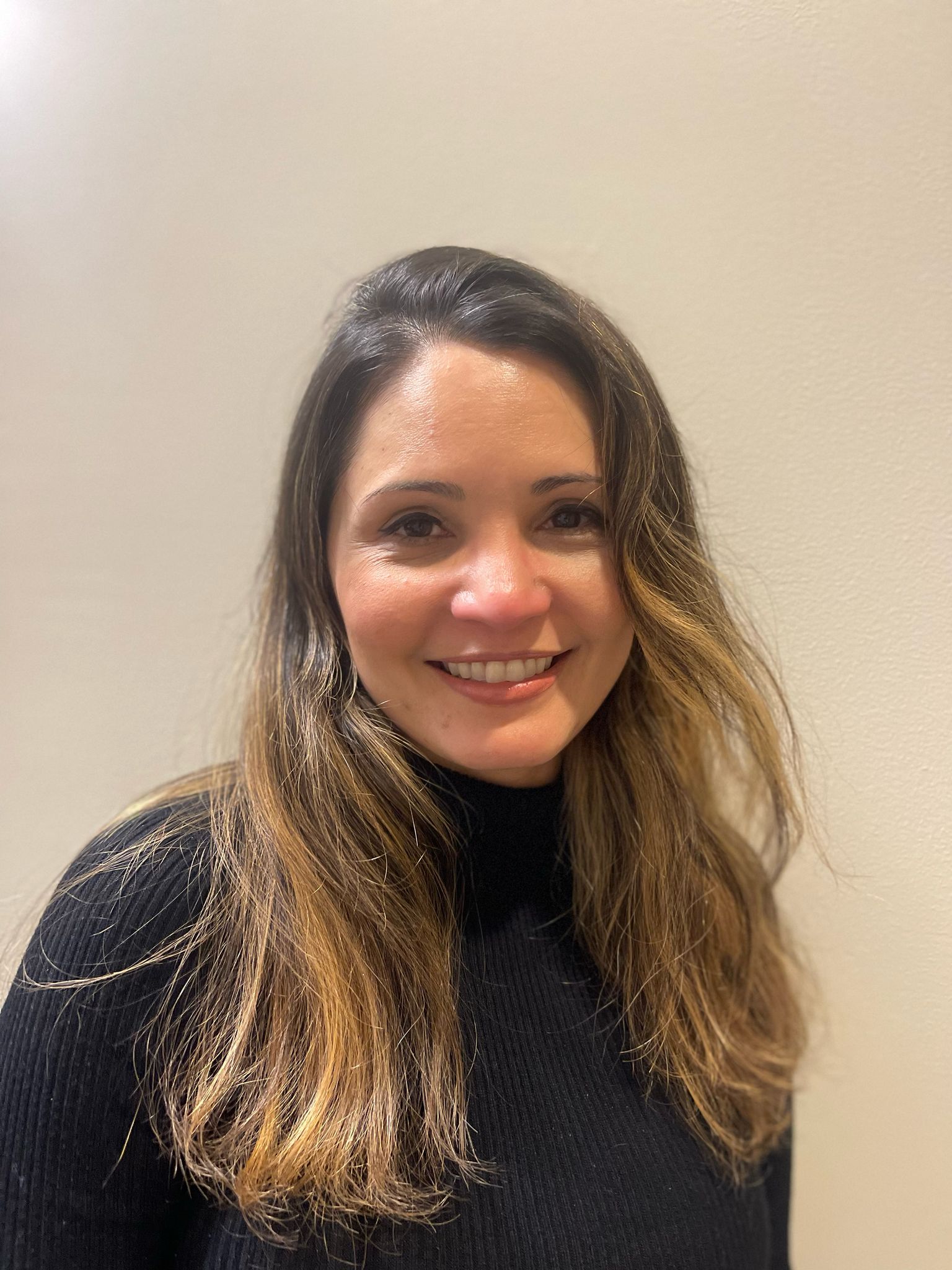
Gloria Caminha is a Ph.D. Candidate (ABD) in the History Program at the Graduate Center, where she obtained a major in United States history and a minor in Latin American studies. Her esearch interests focus on U.S. foreign policy in Latin America, political economy, energy crises, national sovereignty, the Cold War, and economic nationalism. She taught modern U.S. history at Queens College and currently teaches U.S. Foreign Policy in Latin America at John Jay College of Criminal Justice. She is also the Social Media Fellow for the History program through the Graduate Center Digital Initiatives.
“My research project explores how energy politics shaped Brazil-United States relations during the U.S.-backed Brazilian dictatorship (1964–1985), amid global energy crises and Cold War hostilities. It examines the complex, sometimes fraught relationship between the two anti-communist allies, as Brazil sought to develop its energy sector to drive economic development and achieve self-sufficiency. My research underscores the importance of viewing energy not only as a driver of economic development and national security but also as a key force in diplomatic relations, as my approach challenges our understanding of the relationship between two critical hemispheric powers at the height of the Cold War.”
Kerry Doran
Art History

Kerry Doran is a Ph.D. Candidate in Art History at the CUNY Graduate Center. Their dissertation, entitled “The New ‘New World’: Art, Conquest, and the Visual Culture of Personal Computing, 1968–2005,” argues that the cultural fantasy of personal computing is an iteration of the United States’ national mythology—a myth within a myth that obscures the material and ideological reality of conquest. Doran’s research has been supported by Gray Area, the Helen Frankenthaler Foundation, and the Institute for Studies on Latin American Art (ISLAA). They have held teaching positions at Brooklyn College, CUNY, and The City College of New York, CUNY where they taught courses on the art and visual culture of the Western Hemisphere. Previously, Doran was a contributor to Artforum, advisor at M+, and curator-in-residence at UV Estudios. Doran was also the director of bitforms gallery and Postmasters gallery in New York City, as well as a member of the founding team of NEW INC, the New Museum’s incubator for art, design, and technology. Recent publications include contributions to Nuyorican and Diasporican Visual Art: A Critical Anthology (Duke University Press, 2025) and On NFTs (Taschen, 2025).
“Beginning with the Whole Earth Catalog and tracing the rise of the personal computing industry through popular computer magazines such as Byte, my project will demonstrate how tropes from New World colonialism define the imaginary of computation from the sixties onwards. The project also considers how early internet artworks by Coco Fusco and Ricardo Dominguez, Mendi + Keith Obadike, and Âhasiw Maskêgon-Iskwêw (Cree/Métis) critiqued digital colonialism in the mid-1990s and early 2000s.”
Benjamin Claessens
Philosophy
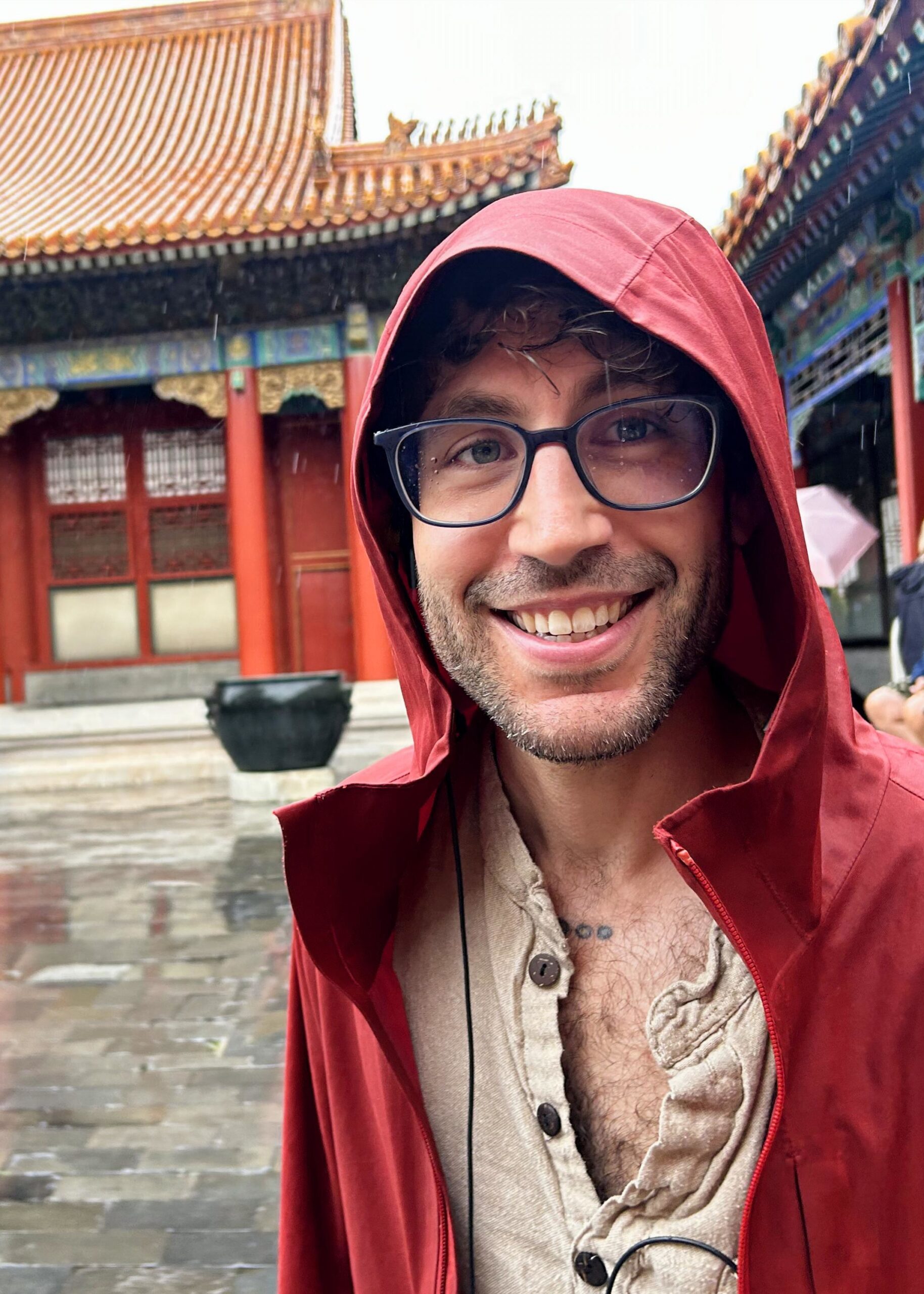
Ben Claessens is a PhD candidate in Philosophy at the CUNY Graduate Center. He is interested in purposes, and the role that they play in our interpretation of phenomena. He earned a BA in philosophy and linguistics from the University of Western Australia.
“Attributions of intention and desire appear central to the prediction and explanation of goal-directed behavior. Perhaps you believe I will paddle into the breakers, for instance, because I intend and desire to catch a wave. But what are intentions and desires, and how do we acquire predictively reliable beliefs about them? This project examines the content and cognition of teleological belief (i.e. belief about purposes), and then analyzes intention and desire in terms of such belief; an intention is a type of desire, and a desire is a teleological belief about one’s own behavior. One of the major contributions of this research is that it offers an empirically grounded reduction of practical reason to theoretical reason. In other words, when you deliberate about what to do, you therein deliberate about what to believe.”
The 2026 CUNY Humanities Catalyst Grant is sponsored by the Center for the Humanities at the CUNY Graduate Center through generous support from an anonymous donor.