Seminar
Seminar
Fall 2011
Caribbean Epistemologies
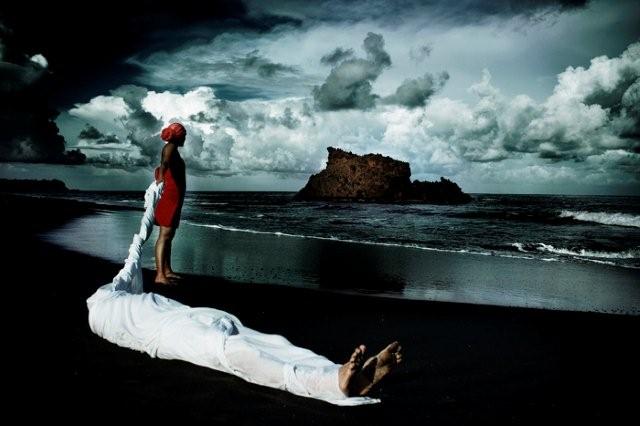
How in the post-colonial present do we conceptualize the societies in the Caribbean? While explicitly a formulation about meaning in the post-colonial present, this question has a deep history concerning how writers, scholars, and artists conceive of the Caribbean. The Caribbean, of course, is a subjective category for its inhabitants and interlocutors, representing distinct, and at times contested categories of analysis. By bringing these meanings and their genealogies into relief and into conversation with one another, the organizers of the seminar point to a generative opportunity for advancing work on the Caribbean in general but in particular at The Graduate Center, CUNY.
MEETING LEADER:: Herman Bennett
Slave Insurgents and the Political Impact of Free Blacks in a Revolutionary Age: The Revolt of 1795 in Coro, Venezuela
Room C415A
co-sponsored by the Slavery & Freedom Working Group
What happens to our understanding of the Age of Revolution if we acknowledge the existence of substantial clusters of free blacks in the Atlantic world? Animated by this question, I intend to describe one of the largest yet neglected slave and free black revolts in the history of the Americas—the 1795 Revolt in Coro, Venezuela. The free black majority in Coro represented a significant source of tension which, I argue, pressed on the local social order in the province as did other clusters of free blacks in the Americas. The accumulated proceedings—mined in Archivo de la Indies, Seville—underscore the threat the 1795 revolt posed to the local social order because of the range of alliances, the movement’s scope and objectives along with the timing of events in the contours of the revolutionary Atlantic. In the context of a colonial slave social formation, such demands and the presence of a free black majority offered a revolutionary challenge. But at its core, this paper asks us to think about the free black majority in Venezuela through an implicit connection to an earlier and concurrent genealogy of freedom cultures among African descendant peoples in the New World who by the late 18th century were experiencing a deep and sustained process of what we generally identify as creolization but which in fact was a cultural and social phenomenon far more layered than the dynamic associated with classic formulations of creolization.
MEETING LEADER:: Deborah Thomas
Caribbean Studies, Archive-Building, and the Problem of Violence
Martin E. Segal Theatre
We will be discussing:
“Caribbean Studies, Archive-Building, and the Problem of Violence” by Deborah Thomas.
Our discussant for this paper will be Jennifer L. Morgan, Department of History and Social Cultural Analysis, NYU.
MEETING LEADER:: Yarimar Bonilla
Non-Sovereign Futures: French Caribbean Politics in the Wake of Disenchantment
9206
Within Caribbean studies much attention has been paid to how the relationships and social practices of slavery have impacted contemporary cultural forms in the region. From carnival, to funerary rites, religious rituals, musical genres, dance, and other forms of artistic and cultural expression – it has often been argued that the cultural products of the contemporary Caribbean are profoundly shaped by the region’s history of slavery. Yet, considerably less attention has been paid to how the political and economic imagination of the area’s residents has been shaped by these processes. Thus begging the question: How are contemporary Caribbean concepts of labor, capital, exploitation, opposition, freedom and autonomy informed by the history of slavery?
This paper examines the ways in which the relationships, concepts and categories of past forms of exploitation and resistance are invoked and re-imagined in the contemporary syndicalist movement in Guadeloupe.
Our discussant for this paper will be Herman Bennett, Department of History, CUNY Graduate Center.
MEETING LEADER:: Thomas Glave
A Conversation with Thomas Glave
Room 8301
The Caribbean Epistemologies seminar will meet with Thomas Glave for a conversation around similar themes that Glave will present for this year’s Audre Lorde/Essex Hemphill Memorial Lecture which will follow at 6:00pm.
MEETING LEADER:: Kaiama Glover
MEETING LEADER:: Frank Guridy
Neither Race Men nor Tragic Mulatas: Afro-Puerto Ricans and the Imperial Transition, 1898-1917
C201
Join Frank Guridy (Associate Professor, Departments of History and African and African Diaspora Studies, University of Texas at Austin) for a discussion on “Neither Race, Men nor Tragic Mulatas: Afro-Puerto Ricans and the Imperial Transition, 1898-1917”.
Afro-Puerto Rican experiences of racialization, gender, and sexual formation have tended to elude many of the conceptual frameworks typically employed in African Diaspora Studies. This paper explores how Puerto Ricans defined as black and mulatto negotiated the transition from Spanish to U.S. colonial rule by examining the experiences of those who attended Tuskegee Institute, the school founded by Booker T. Washington in Tuskegee, Alabama. From 1901 to 1917 the U.S.-controlled Puerto Rican legislature annually sponsored twenty pupils from the island to attend Tuskegee. While these Afro-Puerto Ricans were clearly objects of an imperial project of “Americanization,” a closer examination of the historical evidence reveals that while they did not challenge imperial power, they mastered the racial and gender scripts of empire to negotiate spaces for themselves in the new imperial order on the island. This process of negotiation is not exceptional, but is, Guridy argues, a fundamental individual and collective strategy that many Afro-diasporic subjects employed to counter the effects of imperial racialized power.
The moderator will be Melina Pappademos from the History Department at the University of Connecticut.
Frank Guidry has published essays in the Radical History Review, Caribbean Studies, Social Text, and Cuban Studies. His recent publications include, Forging Diaspora: Afro-Cubans and African-Americans in a World of Empire and Jim Crow(University of North Carolina Press, 2010), and Beyond el Barrio: Everyday Life in Latina/o America, edited with Gina M. Pérez and Adrian Burgos, Jr. (NYU Press, 2010). He is beginning a new project on the history of the Houston Astrodome.
MEETING LEADER:: Pablo Gomez
Pablo Gomez
C203
This paper explores the routes followed by ideas and rites about the body emerging in seventeenth century black Atlantic Caribbean locales like Cartagena de Indias and Havana. Data related to the circulation of bodily knowledge in the Spanish Caribbean evinces a largely ignored process in which black ritual practitioners experimented with new materials and techne they found in the Americas and transmitted a corpus of “bodily knowledge” during the sixteenth and seventeenth century. Perambulating and interconnected black health practitioners, using oral tradition, performance, and material culture, functioned as the primordial links for the diffusion of black ideas about corporeality in the Spanish Caribbean. They shared information across ethnic lines and occupations in Spanish Caribbean locales using social practices traceable to Sub-Saharan African traditions. Within their epistemological realms, these healers probed the Caribbean landscape for medical products and explored the particular socio- cultural make up of the places where they would deploy their practices. As their European counterparts, seventeenth century Spanish Caribbean ritual practitioners of African origin –– coming from Europe and Africa or born in the New World –– engaged in procedural, conceptual, material, and social practices that had the specific objective of inquiring about the human body . Through these practices Caribbean black communities entered a larger conversation about the very nature of knowledge in the early modern era. For all the cries about their supposed primitivism and inferiority, black ritual specialists were at the forefront of the production of empirical knowledge related to the body.
MEETING LEADER::
Reading / Discussion
Our first Seminar meeting for Spring 2012 will be on Friday, February 17, 2:00pm– 4:00pm in Room 9205 at the CUNY Graduate Center. We will be discussing:
“In Praise of Creoleness” (translation of Eloge de la créolité) by Jean Bernabé, Patrick Chamoiseau & Raphaël Confiant
“Order, Disorder, Freedom and the West Indian Writer” by Maryse Conde
Our discussants for these readings will be:
- Yarimar Bonilla, Anthropology and Caribbean Studies, Rutgers University
- Jeremy M. Glick, English, Hunter College, CUNY
REGISTER/LOGIN
Please Login
You have to create an account to register for a seminar.
Login | Create a New Account
User login
Login Register Panel
Registration Form
error loading registration form


Add comment